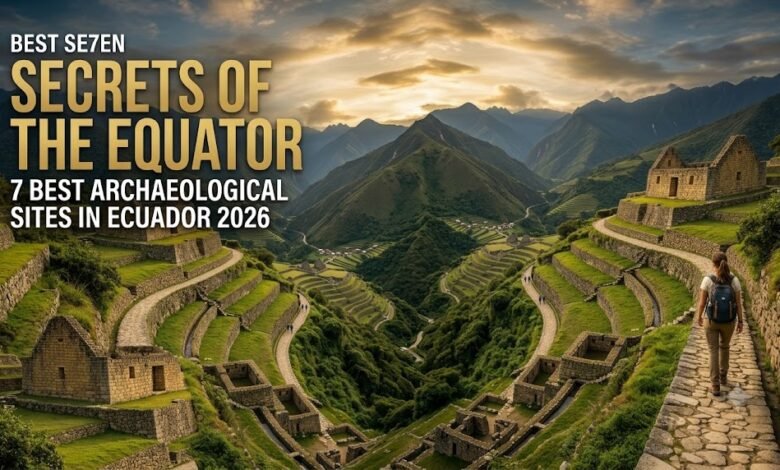
7 Best Archaeological Sites in Ecuador to Visit in 2026
Ecuador offers far more than dramatic volcanoes, cloud forests, and Pacific beaches. It is also one of South America’s most rewarding destinations for history lovers, with ancient settlements, ceremonial centers, and cultural landscapes that reveal thousands of years of human adaptation.
For travelers who want more than surface-level sightseeing, the best Archaeological Sites in Ecuador provide a direct connection to pre-Inca societies, Inca expansion, and the long continuity of Andean life. In 2026, these sites remain essential stops for anyone seeking a deeper understanding of the country’s past.
1. Ingapirca Archaeological Complex
Ingapirca is the most famous Inca site in Ecuador, and for good reason. It combines Inca stonework, Cañari heritage, and a highland setting that makes the experience both visually impressive and historically important.
The Temple of the Sun is the highlight, built with finely cut stones that demonstrate advanced engineering and astronomical awareness. The site also includes terraces, storage areas, and pathways that show how the Inca adapted their architecture to the Andean terrain.
For visitors, Ingapirca is best explored with a guide. A knowledgeable guide can explain the relationship between the Inca and the Cañari, which is critical to understanding why this site matters among the major Archaeological Sites in Ecuador.
The best time to visit is during dry weather, when walking the complex is easier and the mountain views are clearer. Bring layers, as temperatures can change quickly at high altitude.
2. Cochasquí Archaeological Park
Cochasquí is one of the most intriguing pre-Columbian sites in northern Ecuador. It is known for its large pyramidal mounds, many of which were built by the Quitu-Cara culture long before the Inca arrived.
Unlike the better-known stone monuments of the Andes, Cochasquí features earthworks and ceremonial platforms. This gives archaeologists valuable clues about construction methods, ritual life, and social organization in the region.
The site’s museums and interpretive centers help explain how the mounds were likely used for astronomy, agriculture, and ceremonial gatherings. This makes Cochasquí especially useful for travelers who want context, not just ruins.
Because the site sits in a cool highland environment, it is a comfortable day trip from Quito. It is also one of the most underrated Archaeological Sites in Ecuador, which means visitors often enjoy a quieter, more reflective experience.
3. Pumapungo Archaeological Park
Pumapungo, located in Cuenca, combines archaeology, museum collections, and urban convenience. It is one of the best places to understand how the Inca integrated administrative control with ritual and residential spaces in southern Ecuador.
The park preserves stone foundations, terraces, and reconstructed elements that illustrate the scale of the former city of Tomebamba. This was an important Inca center, later affected by Spanish conquest and colonial rebuilding.
The adjoining museum adds major value. It houses artifacts, ethnographic displays, and even a well-known display of the country’s indigenous cultures, helping visitors connect material remains with living traditions.
Pumapungo is ideal for travelers with limited time. Because it is in the city, it can be visited easily, yet it still provides serious historical insight into one of the most important Archaeological Sites in Ecuador.
4. La Tolita Island and Coastal Cultural Zones
La Tolita is one of Ecuador’s most significant coastal archaeological regions, especially for understanding pre-Columbian goldwork and artistic sophistication. The culture associated with this area flourished along the northern coast and nearby islands, producing objects of remarkable craftsmanship.
Many artifacts from La Tolita reveal strong ceremonial, social, and elite functions. Masks, figurines, and gold ornaments show that coastal societies in Ecuador were highly organized and spiritually complex long before European contact.
Visiting the region requires more planning than highland sites, but the historical payoff is enormous. Local museums and regional collections often provide the best way to appreciate the site’s legacy, especially because some archaeological areas are sensitive and not always fully open to casual tourism.
For researchers and serious history travelers, La Tolita stands out as one of the most culturally rich Archaeological Sites in Ecuador. It is especially important for understanding the diversity of Ecuador’s ancient societies beyond the Andes.
5. Rumicucho Archaeological Site
Rumicucho lies near Quito and was an important Inca military and administrative center. Its position gives it strategic value, as it allowed the Inca to monitor movement through the northern highlands and consolidate control over the region.
The site’s terraces and stone structures show clear evidence of planned construction. While not as monumental as Ingapirca, Rumicucho is historically powerful because it reflects imperial expansion and the political realities of Inca occupation.
One of the best ways to visit Rumicucho is to pair it with other northern highland sites. Doing so helps travelers see how the Inca built a network of control rather than isolated monuments.
Travelers interested in military history, imperial strategy, and site layout will find Rumicucho especially rewarding. It is a key stop for anyone studying Archaeological Sites in Ecuador with a focus on empire and governance.
6. Agua Blanca Archaeological and Community Reserve
Agua Blanca is a standout coastal destination because it combines archaeology with community-based tourism. Located in Machalilla National Park, it preserves evidence of ancient settlements while also involving local residents in site management and interpretation.
The site is linked to the Manteño culture, known for trade, coastal adaptation, and social complexity. Visitors can see the remains of structures, learn about burial practices, and explore the surrounding reserve, which includes a sulfur lagoon and dry forest landscapes.
What makes Agua Blanca especially valuable is the way it connects past and present. Local guides often share both archaeological knowledge and cultural stories, creating a richer and more responsible visitor experience.
For travelers who prefer meaningful tourism, this is one of the most balanced Archaeological Sites in Ecuador. It offers history, ecology, and community engagement in one destination.
7. El Inga Archaeological Site
El Inga is one of the most important prehistoric sites in Ecuador for understanding early human occupation. Located in the highlands near Quito, it has produced evidence of very ancient stone tools associated with early hunter-gatherer groups.
This site is not about temples or monumental ruins. Its importance lies in the deep timeline of human presence in the region, helping researchers study migration, technology, and survival in early Andean environments.
Because of its archaeological significance, El Inga is especially valuable to scholars and visitors with an interest in human origins. It shows that Ecuador’s story begins far earlier than the rise of famous civilizations.
For 2026 travelers, El Inga offers a rare chance to think beyond iconic ruins and consider the full sweep of settlement history. Among the Archaeological Sites in Ecuador, it is one of the most important for prehistory.
Frequently Asked Questions (FAQs)
Which archaeological site in Ecuador is the most famous?
Ingapirca is generally considered the most famous archaeological site in Ecuador. It is the largest and best-preserved Inca site in the country.
Are these sites suitable for family travel?
Yes, most of them are suitable for families, especially Ingapirca, Pumapungo, and Cochasquí. Guided visits help make the history easier for children to understand.
Do I need a guide to visit archaeological sites in Ecuador?
A guide is not always required, but it is highly recommended. A good guide adds historical context and helps you appreciate details that are easy to miss.
Which site is best for learning about early human history?
El Inga is the best choice for early human history. It provides evidence of some of the oldest known occupations in the region.
Conclusion
Ecuador’s ancient past is layered, diverse, and deeply connected to the land. From Inca ceremonial centers to coastal cultures and prehistoric settlements, the country offers history travelers a wide range of experiences that go well beyond standard tourism.
If you are planning a cultural journey in 2026, the Archaeological Sites in Ecuador should be high on your list. Each one tells a different part of the story, and together they reveal the remarkable depth of Ecuador’s human heritage.