7 Best Structural Engineering Marvel Bridges Defying Gravity
Bridges are more than routes across water, valleys, and traffic corridors. The best examples are landmarks of human ambition, where design, materials, and construction methods come together to solve extreme engineering challenges.
This guide explores seven remarkable examples of Structural Engineering Marvel Bridges that continue to shape how engineers think about span length, stability, durability, and visual impact. Each bridge shows how technical precision can create something that feels almost impossible.

1. Akashi Kaikyō Bridge, Japan
The Akashi Kaikyō Bridge is one of the most iconic suspension bridges in the world. It spans the Akashi Strait and connects Kobe to Awaji Island, where strong winds, deep water, and seismic risk demanded extraordinary design.
Its central span measures 1,991 meters, which places it among the longest suspension spans ever built. Engineers used high-strength steel, aerodynamic deck shaping, and massive anchor blocks to control movement and resist typhoon forces.
A key lesson from this bridge is how structural flexibility can be a strength. Instead of fighting movement completely, the design manages it through tuned dampers, tower geometry, and cable systems that distribute loads efficiently.
For civil engineers, the Akashi Kaikyō Bridge remains a benchmark for earthquake resistance. It was designed with enough tolerance to survive major seismic activity, making it a model for resilient long-span bridge design.
2. Millau Viaduct, France
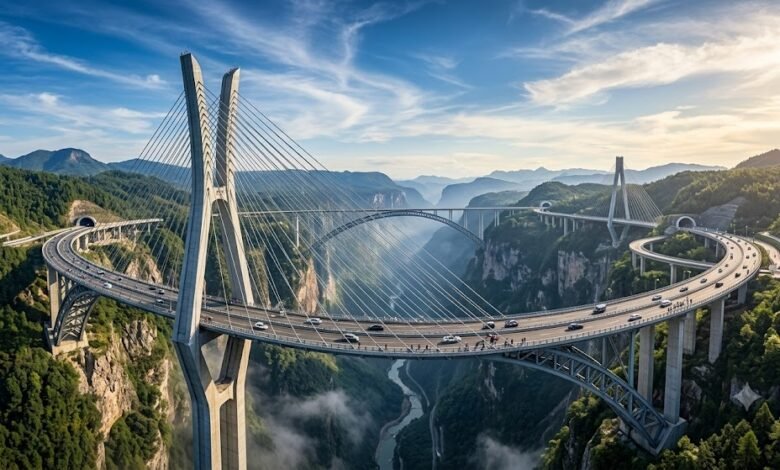
The Millau Viaduct is a cable-stayed bridge that seems to float above the valley below. It carries traffic across the Tarn Valley in southern France, and its tallest pylon rises higher than the Eiffel Tower.
This bridge is one of the finest examples of elegant structural efficiency. Instead of using a massive amount of material, the design relies on slender piers, precise cable placement, and aerodynamic shaping to achieve strength with visual lightness.

The construction process was just as impressive as the finished bridge. Engineers used a staged launching method to move the deck section by section, reducing risk and improving control over alignment.
The Millau Viaduct is a strong reminder that bridge design is not only about holding weight. It is also about controlling deflection, wind response, and long-term performance while preserving visual harmony with the landscape.
3. Øresund Bridge, Denmark and Sweden
The Øresund Bridge is a combined bridge, tunnel, and artificial island connection between Copenhagen and Malmö. It solves a complex transportation problem by switching between bridge and tunnel where shipping, aviation, and marine conditions required different solutions.
This project is a classic example of multidisciplinary structural planning. Engineers had to coordinate road and rail loads, marine foundations, environmental protection, and international border requirements in one integrated system.
The bridge section uses a cable-stayed design with a long main span and twin pylons. Its structure had to remain stable under harsh Baltic weather while also supporting both rail and highway traffic with strict vibration limits.
The Øresund Bridge shows how infrastructure can be both functional and strategic. It improved regional connectivity while proving that structural design can adapt to geography instead of forcing geography to adapt to design.
4. Golden Gate Bridge, United States
The Golden Gate Bridge is one of the most recognizable structures on the planet. Opened in 1937, it remains a masterpiece of suspension bridge engineering and a symbol of San Francisco’s identity.
At the time of its construction, it pushed the limits of what was considered possible. Strong winds, deep water, and strong currents made foundation work extremely difficult, while the bridge’s main span required careful cable engineering and tower design.
Even today, the Golden Gate Bridge is studied for its maintenance strategy. Corrosion control, repainting, seismic retrofits, and continuous inspection have helped it remain safe and operational for decades.
Its long life demonstrates a critical truth in bridge engineering: durability is designed and maintained, not simply expected. The bridge remains one of the best-known Structural Engineering Marvel Bridges because it combines beauty, function, and long-term resilience.
5. Jiaozhou Bay Bridge, China
The Jiaozhou Bay Bridge stretches across a large bay in eastern China and is known for its enormous length. It was built to improve regional transportation and reduce travel time between Qingdao and surrounding areas.
This bridge is a major achievement in marine bridge construction. Engineers dealt with soft seabed conditions, corrosion risks, and the need for consistent structural performance over a very long alignment.
Its design uses repetitive spans supported by a large number of piers, which helps distribute loads and simplify construction over challenging water conditions. For large-scale infrastructure, repetition can be an efficient way to control cost and construction speed.
The bridge also highlights the importance of logistics. In projects of this scale, material supply, foundation sequencing, and quality control are as important as the final structural form.
6. Ponte de la Constitución de 1812, Spain
Known locally as the “La Pepa Bridge,” this cable-stayed bridge in Cádiz stands out for its modern profile and efficient structural form. It connects the city to the mainland and became a vital part of the region’s traffic network.
The bridge was designed to accommodate both roadway clearance and shipping requirements, which meant the main span had to provide significant vertical and horizontal openness. Cable-stayed systems are ideal for such conditions because they can carry heavy loads with relatively slender decks.
One strength of this bridge is its clear structural logic. The towers, cables, and deck work together in a visible load path, making it a useful teaching example for younger engineers studying cable-stayed behavior.
In terms of modern bridge planning, it demonstrates how aesthetics and structural performance can support each other. A good bridge is not only strong; it should also communicate how it stands.
7. Hong Kong–Zhuhai–Macao Bridge, China
The Hong Kong–Zhuhai–Macao Bridge is a massive system of bridges, tunnels, and artificial islands linking three major cities in the Pearl River Delta. It is not a single bridge in the traditional sense, but it is one of the most ambitious transport structures ever completed.
Its engineering challenge was exceptional. Designers had to address deep-water navigation, typhoon exposure, marine ecology, and the movement of ships and aircraft while creating a continuous transportation corridor.
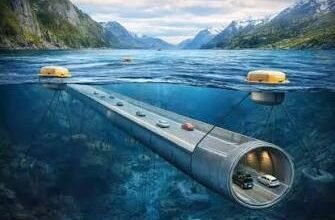
The project includes a submerged tunnel section to keep shipping lanes clear. That combination of bridge and tunnel engineering makes it a powerful example of adaptive design at a regional scale.
This project also shows how modern mega-projects rely on systems engineering. Structural design, environmental protection, traffic planning, and long-term monitoring all had to work together for the bridge network to succeed.
Frequently Asked Questions (FAQs)
What makes a bridge a structural engineering marvel?
A bridge becomes a structural engineering marvel when it solves difficult span, load, environmental, or construction problems with a highly efficient design. These bridges often set new standards for scale, safety, or innovation.
Are long bridges always the most impressive?
Not always. Length matters, but a shorter bridge can be more impressive if it solves a difficult problem such as seismic risk, extreme wind, poor soil, or heavy traffic in a very efficient way.
Why are suspension and cable-stayed bridges so common in landmark projects?
Both systems are excellent for long spans because they move loads efficiently through cables and towers. They also allow large clearances for ships, roads, or rail lines beneath the deck.
How do engineers keep these bridges safe over time?
They use inspection programs, corrosion protection, structural health monitoring, maintenance planning, and retrofitting when needed. Long-term safety depends on continuous care, not just initial design.
Conclusion
The world’s most impressive bridges are proof that engineering can be both practical and inspiring. From seismic resilience to extreme spans and complex marine conditions, each example in this list shows how smart design turns serious constraints into lasting achievement.
These Structural Engineering Marvel Bridges remind us that great infrastructure is built through precision, creativity, and disciplined execution. They do not just connect places; they define eras of engineering progress.