Best 7 Turkish Air Defense Systems in 2027
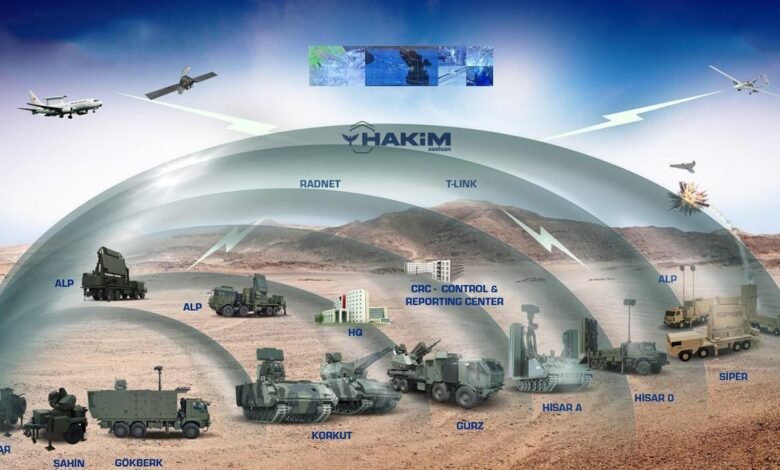
Turkey has built one of the most ambitious air defense modernization programs in its history. By 2027, the country’s layered shield will combine short-range, medium-range, and long-range solutions designed to counter drones, helicopters, cruise missiles, aircraft, and selected ballistic threats.
For defense analysts, procurement teams, and military readers, the most important point is this: Turkish air defense systems 2027 are no longer defined by a single flagship platform. They are becoming a networked family of systems built around sensors, command-and-control, and indigenous missiles.
1- Siper Long-Range Air and Missile Defense System
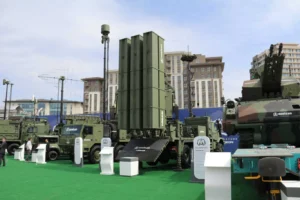
Siper is the centerpiece of Turkey’s upper-tier air defense architecture. It is designed to protect critical infrastructure, military bases, and strategic areas against high-altitude aircraft and missile threats.
What makes Siper important is not just range, but its role in the broader kill chain. It links long-range radars, command posts, and launchers into a modern integrated network, which improves reaction time and target discrimination.
By 2027, Siper will likely be the system most associated with Turkish air defense systems 2027 at the strategic level. Its value comes from layered coverage, mobility, and the ability to evolve through block upgrades.
2- Hisar-O+ Medium-Range Air Defense System
Hisar-O+ fills the critical middle layer between point defense and long-range coverage. It is built to engage aircraft, helicopters, precision-guided munitions, and some drone threats at medium altitude and distance.
The system is especially useful because it can protect mobile formations as well as fixed sites. In modern warfare, that flexibility matters almost as much as raw range.
Hisar-O+ also reflects Turkey’s push for local control over missile production and sensor integration. For operational planners, it is one of the most practical systems in the Turkish air defense systems 2027 lineup because it covers the threats that appear most often in real combat.

3- Hisar-A+ Short-Range Air Defense System
Hisar-A+ is built for lower-altitude and shorter-distance threats. It is a vehicle-based system intended to protect maneuver units, command centers, and exposed assets from attack helicopters, drones, and low-flying aircraft.
Its strength lies in speed and mobility. A short-range system like this is often the first layer that responds when air threats break through the higher tiers or appear suddenly at close range.
In battlefield terms, Hisar-A+ provides the kind of point protection that keeps a force alive under saturation pressure. It is also a strong example of how Turkish air defense systems 2027 are being structured as a full stack rather than isolated platforms.
4- Korkut Self-Propelled Air Defense System
Korkut is one of Turkey’s most effective gun-based air defense solutions. It uses 35 mm cannons and smart ammunition to defeat drones, helicopters, and very low-flying threats at short range.
This system is especially relevant in the age of drone warfare. Small UAVs and loitering munitions have changed the air defense problem, and cannon systems remain cost-effective against targets that are too cheap to justify missile use.
Korkut is valuable because it adds volume of fire and rapid engagement to the wider network. In a layered defense, it acts as a hard-kill terminal layer and helps conserve missiles for more difficult targets.
5- Sungur Man-Portable Air Defense System
Sungur is Turkey’s modern man-portable air defense missile system. It gives infantry and special units a lightweight but powerful tool against helicopters, drones, and low-speed aircraft.
The system’s portability is a major operational advantage. Units can carry it into terrain where vehicles cannot move easily, making it useful in mountains, border zones, and dispersed defensive positions.
Sungur also supports the shift toward distributed defense. In Turkish air defense systems 2027, it represents the final close-in layer that can be deployed quickly, hidden easily, and used to create surprise around key positions.
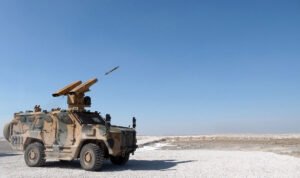
6- Gökdemir / Bozdoğan-Based Air Defense Solution
Turkey’s air-to-air missile technology is increasingly being adapted for ground-based defense concepts, and this is where Gökdemir-related development becomes important. Systems built around this approach aim to provide a fast-reacting, radar-guided defense option with domestic missile logic.
The advantage of using air-to-air missile heritage is agility and proven seeker technology. These weapons can be adapted for point and area defense where quick engagement cycles matter.
While the ecosystem is still evolving, this family of solutions is strategically important because it extends local missile know-how into new air defense roles. That makes it one of the more interesting entries in Turkish air defense systems 2027 from a development perspective.
7- Radar and Command Network: ALP Series and Integrated C4I Backbone
No air defense system works well without sensors and command software. Turkey’s ALP radar family and integrated command-and-control architecture are therefore essential parts of the overall shield.
This layer is responsible for early warning, track fusion, identification, and target handoff between systems. In practice, a strong radar network can be more decisive than the launcher itself because it determines whether a threat is seen early enough to be defeated efficiently.
For 2027, this digital backbone is what turns separate launchers into a national air defense mesh. In any serious review of Turkish air defense systems 2027, the sensor-and-command layer must be included because it is the real multiplier across the entire force.
Summary Comparison
| System | Main Role | Typical Threats | Mobility | Key Strength | Best Use Case |
|---|---|---|---|---|---|
| Siper | Long-range defense | Aircraft, cruise missiles, selected ballistic threats | Medium | Strategic coverage | Base and infrastructure defense |
| Hisar-O+ | Medium-range defense | Aircraft, helicopters, drones, munitions | High | Balanced range and mobility | Area defense for forces and sites |
| Hisar-A+ | Short-range defense | Low-flying aircraft, drones | High | Fast tactical response | Mobile unit protection |
| Korkut | Gun-based short-range defense | UAVs, loitering munitions, helicopters | High | Low-cost hard-kill engagement | Terminal defense and drone defeat |
| Sungur | Very short-range/portable defense | Helicopters, drones, low-speed aircraft | Very high | Infantry portability | Close protection and ambush defense |
| Gökdemir / Bozdoğan-based concept | Point defense evolution | Fast, low-altitude aerial threats | Medium | Domestic missile adaptation | Specialized rapid-response defense |
| ALP radar and C4I backbone | Sensor and command layer | All aerial threats | Networked | Early warning and coordination | Integrated national air defense |
Frequently Asked Questions (FAQs)
Which Turkish air defense system is the most important in 2027?
Siper is the most strategically important because it provides long-range protection and anchors the upper layer of the national defense network.
Are Turkish air defense systems 2027 fully independent?
Turkey has made major progress in domestic design, missile production, radar development, and command integration. Some subsystems may still involve external components, but the overall trend is toward higher indigenous capability.
Which system is best against drones?
Korkut is one of the strongest solutions for drones, especially when cost-effective hard-kill engagement is needed. Sungur and Hisar systems also contribute depending on range and target profile.
Why is the radar network so important?
Because air defense is a chain. If the radar and command layer detects and classifies threats early, the launchers can engage faster, coordinate better, and waste fewer missiles.
Conclusion
The future of Turkish air defense systems 2027 is defined by layers, integration, and domestic control. Turkey is no longer building only individual missiles or launchers; it is building a connected defense ecosystem that can respond to modern air threats with flexibility and scale.