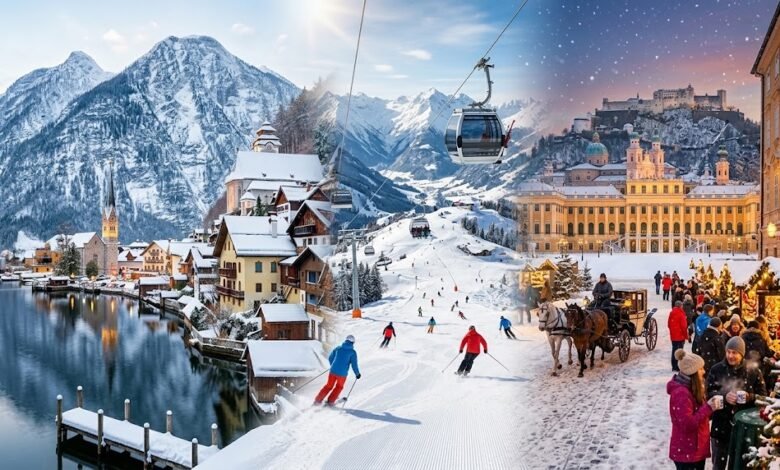
7 Best Places to Spend Winter in Austria 2027
When exploring the best Places to Spend Winter in Austria, you will quickly see why this country holds a truly unique position in the world of winter travel. While other destinations focus solely on rugged backcountry sports or modern luxury, Austria seamlessly marries high-octane alpine thrills with centuries of imperial history and classical culture. In 2027, the Austrian winter experience remains the quintessential European holiday, defined by snow-draped Baroque palaces, lively town squares scenting the cold air with roasted chestnuts, and arguably the most spirited après-ski culture in the world.
Before you map out your journey through the Austrian Alps, see how the country ranks on the international stage in our ultimate guide to the 7 best winter wonderland countries for snow lovers in 2027.
Whether you want to glide along the historic slopes where alpine skiing was born, attend an imperial winter ball, or lose yourself in an idyllic lakeside village straight out of a fairy tale, Austria exceeds every expectation. Here is our curated guide to the 7 best places to spend winter in Austria.
7- Innsbruck: The Capital of the Alps
Innsbruck offers a rare urban winter escape where the border between city life and rugged alpine peaks practically disappears. Surrounded by the towering Nordkette mountain range, this historic Tyrolean capital allows you to take a futuristic funicular designed by Zaha Hadid straight from the city center up to a ski station in under twenty minutes.
Having hosted the Winter Olympics twice, Innsbruck possesses world-class winter sports credentials. Visitors can marvel at the historic Golden Roof (Goldenes Dachl) in the medieval Old Town, explore imperial Habsburg architecture, and watch ski jumpers train at the world-famous Bergisel Ski Jump. For travelers who want the excitement of ski runs alongside high-end museums and vibrant dining, Innsbruck is the ultimate base camp.
6- Hallstatt: The Storybook Lakeside Village
Nestled between the tranquil waters of Lake Hallstatt and the sheer cliffs of the Dachstein Alps, Hallstatt is one of the most photographed villages on Earth. While summer brings crowds of tour buses, winter transforms this UNESCO World Heritage village into a peaceful, hushed wonderland draped in snow.

The 16th-century Alpine houses with their timber balconies look breathtaking when reflected in the icy waters of the lake. Winter in Hallstatt invites slow, contemplative travel: sipping spiced mulled wine in the quiet market square, visiting the historic bone house (Beinhaus), and riding the funicular up to the Hallstatt Skywalk for a panoramic view of the frozen Salzkammergut region.
5- Zell am See – Kaprun: Glaciers and Lakeside Magic
Located in the province of Salzburg, the paired region of Zell am See and Kaprun provides an exceptional combination of guaranteed glacier skiing and dramatic lakeside scenery. The centerpiece is Lake Zell, which frequently freezes in the heart of winter, surrounded by towering peaks and an idyllic historic town center with cobblestone streets.
Just up the valley lies the Kitzsteinhorn Glacier, offering high-altitude skiing at over 3,000 meters above sea level where prime snow conditions are guaranteed well into late spring. After carving down the glacier pistes, visitors can unwind at the Tauern Spa, one of Austria’s largest and most modern wellness resorts, featuring heated outdoor pools that steam against the freezing mountain air.
4- Salzburg: Baroque Wonders and Festive Traditions
As the birthplace of Wolfgang Amadeus Mozart, Salzburg takes on a magical, musical resonance during the winter months. Overlooked by the imposing 11th-century Hohensalzburg Fortress, the city’s UNESCO-listed Baroque Old Town turns into a romantic snow globe that feels suspended in time.
Salzburg’s Christmas and winter markets are among the oldest and most atmospheric in Europe, filled with traditional choral performances and artisan wooden handicrafts. Classical concerts resonate through historic marble halls throughout the winter season. Furthermore, Salzburg serves as the perfect gateway to the surrounding Ski Amadé network, allowing visitors to spend their mornings skiing and their evenings listening to live classical music in historic palaces.
3- Kitzbühel: The Legendary Hahnenkamm and Alpine Prestige
If you are looking for timeless prestige, luxury chalets, and legendary ski racing heritage, Kitzbühel is the undisputed jewel of Tyrol. Every January, the town becomes the focal point of the winter sports universe as it hosts the Hahnenkamm Race on the terrifyingly steep “Streif” course, widely considered the most dangerous downhill ski race in the world.
Beyond the racing spectacle, Kitzbühel offers a remarkably charming, medieval town center framed by painted pastel facades and high-end boutiques. The ski area encompasses over 230 kilometers of perfectly maintained pistes, suitable for all skill levels, complemented by a lavish dining scene that ranges from rustic mountain huts serving hot Kaiserschmarrn to Michelin-starred establishments.
2- Vienna: Imperial Elegance and the Grand Ball Season
Vienna in winter is an exercise in pure imperial majesty. Austria’s capital does not rely on snow slopes to enchant its visitors; instead, it leans into its monumental heritage, classical music institutions, and opulent coffeehouse culture. Winter is the time to sit inside a traditional grand cafe like Cafe Central, warming up with a rich Melange coffee and a slice of Sachertorte while reading by marble pillars.
Starting in January, the city enters its historic “Ball Season,” hosting hundreds of glamorous formal balls where guests in tuxedos and evening gowns waltz across palace ballrooms like the Hofburg. Outside the Neo-Gothic Rathaus (City Hall), the square transforms into the “Vienna Ice Dream” (Wiener Eistraum)—an expansive, multi-level ice-skating trail weaving through illuminated park trees and grand architecture, creating an unforgettable urban winter fairy tale.
1- St. Anton am Arlberg: The Cradle of Alpine Skiing
Taking the top spot on our Austrian list is St. Anton am Arlberg, located in the rugged Arlberg region. Widely revered as the “Cradle of Alpine Skiing,” this is where the fundamental techniques of modern downhill skiing were developed in the early 20th century. Today, as part of the interconnected Ski Arlberg arena—the largest contiguous ski area in Austria—it offers some of the most challenging off-piste and deep-powder terrain on the continent.
Yet, St. Anton’s legendary status is equally defined by its world-famous après-ski culture. As the sun begins to dip behind the alpine peaks, mountain venues like the MooserWirt and Krazy Kanguruh erupt with music and celebration, drawing international winter enthusiasts together. For the ultimate Austrian winter experience that combines unparalleled sporting heritage with high-energy camaraderie, St. Anton remains the gold standard.
Austrian Winter Destinations Comparison (2027)
| Rank | Destination | Region | Vibe & Atmosphere | Key Winter Attraction |
| 1 | St. Anton am Arlberg | Tyrol | Legendary, athletic, vibrant | World-famous skiing & iconic après-ski |
| 2 | Vienna | Capital Region | Imperial, cultured, romantic | Winter Ball Season & Vienna Ice Dream |
| 3 | Kitzbühel | Tyrol | Prestigious, upscale, historic | The Hahnenkamm Downhill Race |
| 4 | Salzburg | Salzburg | Musical, Baroque, fairy-tale | Hohensalzburg Fortress & historic markets |
| 5 | Zell am See – Kaprun | Salzburg | Scenic, versatile, relaxing | Kitzsteinhorn Glacier & Tauern Spa |
| 6 | Hallstatt | Upper Austria | Quiet, picturesque, iconic | Snow-covered UNESCO lakeside village |
| 7 | Innsbruck | Tyrol | Urban-alpine, dynamic | Nordkette cable car from city center |
Frequently Asked Questions (FAQs)
What is the best month to visit Austria for winter sports and markets?
If your primary goal is to experience the Christmas markets and festive holiday charm, December is unbeatable, especially in Vienna and Salzburg. However, for the most reliable snow depths and optimal skiing conditions across the Alps, late January through February is the prime window.
Can you enjoy Austria in winter if you don’t ski?
Absolutely. Austria caters heavily to non-skiers. You can immerse yourself in Vienna’s imperial ball season and historic cafes, explore medieval fortresses in Salzburg, take romantic horse-drawn sleigh rides in Tyrol, or relax in world-class alpine thermal baths like the Tauern Spa.
How easy is it to travel around Austria in winter by train?
Austria has one of the most efficient, punctual, and comfortable rail networks in Europe (ÖBB). High-speed Railjet trains connect Vienna, Salzburg, and Innsbruck seamlessly, even in heavy winter conditions. Many premier ski destinations like St. Anton and Kitzbühel have direct train stations located within walking distance of resort centers.
Conclusion: Classical Warmth Amidst Alpine Snow
Winter in Austria is not merely a season to endure; it is a masterclass in living well despite the cold. From the rhythmic waltzes echoing through gilded Viennese palaces to the adrenaline-pumping descents of the Tyrolean peaks, Austria proves that winter travel can be simultaneously thrilling and deeply sophisticated.
Over to You!
Are you packing your skis to conquer the legendary Arlberg slopes of St. Anton, or do you picture yourself waltzing across a grand palace ballroom in Vienna? Tell us about your dream Austrian winter itinerary in the comments below!