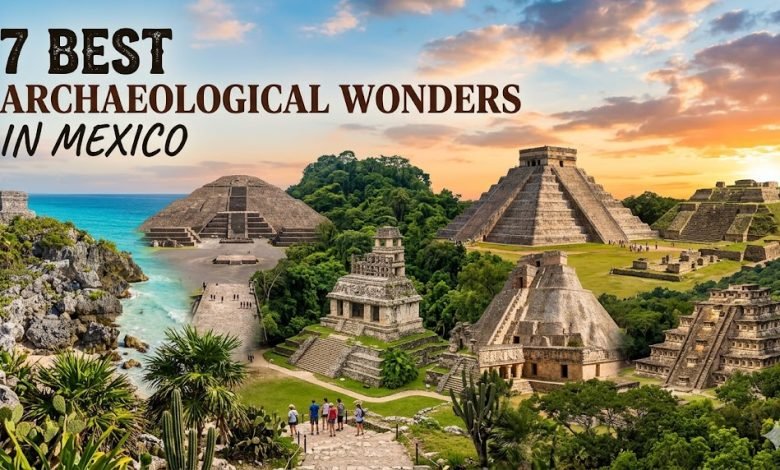
Archaeological Sites in Mexico for Mesoamerican Secrets
Embarking on a journey through Mesoamerican history reveals a mesmerizing world of monumental pyramids, cosmic alignments, and lost civilizations. For travelers and history enthusiasts planning their 2026 adventures, exploring the most iconic Archaeological Sites in Mexico is an absolute must.
These ancient cities offer a fascinating glimpse into the astronomical brilliance and architectural mastery of the Mayan, Aztec, and Zapotec empires. Here are the seven historical wonders you cannot miss.
Pro tip: Visit the region between December and February to enjoy the dry season; and hire local Mayan guides to hear their oral histories firsthand! You can also check out our guide to the top 10 tourist destinations in Mexico to visit in 2026.
7 Best Archaeological Sites in Mexico: Iconic Mayan Ruins 2026
Embarking on a journey through Mesoamerican history reveals a mesmerizing world of monumental pyramids, cosmic alignments, and lost civilizations. For travelers and history enthusiasts planning their 2026 adventures, exploring the most iconic Archaeological Sites in Mexico is an absolute must. These ancient cities offer a fascinating glimpse into the astronomical brilliance and architectural mastery of the Mayan, Aztec, and Zapotec empires. Here are the seven historical wonders you cannot miss.
1. Chichen Itza: The Astronomical Wonder
As the undisputed crown jewel of the Mayan world (600-1200 AD), Chichen Itza stands out prominently among all Archaeological Sites in Mexico. Its centerpiece, El Castillo, is a massive stone calendar featuring exactly 365 steps representing the solar year. During the spring and autumn equinoxes, the sun casts a shadow that forms a descending feathered serpent known as Kukulkan. Recognized as a prestigious UNESCO World Heritage Site, this 1,000-room ancient city also features the chilling Sacred Cenote—where jade, gold, and artifacts were offered—and the largest Mesoamerican ballcourt ever discovered.
2. Teotihuacan: The Mysterious City of the Gods
Dating back to 100 BC, Teotihuacan remains one of the most enigmatic and massive Archaeological Sites in Mexico. Known as the “City of the Gods,” it boasts the colossal Pyramid of the Sun, which stands 65 meters tall as the largest pre-Columbian structure in the Americas. Visitors can walk the awe-inspiring 2-kilometer-long Avenue of the Dead, connecting to the Pyramid of the Moon. Astonishingly, this cosmic city housed 200,000 residents and was built entirely without the use of the wheel or beasts of burden, leaving behind unsolved mysteries and hidden rivers of liquid mercury beneath its foundations.

3. Palenque: The Jungle Jewel of Mayan Art
Nestled deep within lush tropical rainforests, Palenque (226-799 AD) is universally celebrated for its unmatched sculptural art and sophisticated architecture. The famous Temple of Inscriptions holds the tomb of Pakal the Great and features the longest surviving Mayan glyph text, spanning 620 characters. Some theorists even debate its intricately carved sarcophagus lid, claiming it depicts ancient space travel. With its towering palaces and detailed stelae, Palenque’s lush setting easily rivals the sophistication of Angkor Wat, making it one of the most visually stunning Archaeological Sites in Mexico.
4. Tulum: The Majestic Coastal Fortress
Perched dramatically on clifftops overlooking the turquoise waters of the Caribbean Sea, Tulum (1200-1500 AD) offers a uniquely picturesque setting. As a walled seaside city, it was heavily guarded by the prominent El Castillo pyramid. This beautifully preserved coastal fortress, which features the fascinating Temple of Frescoes showcasing the descending god and the Xibalba underworld, was actually one of the very first Archaeological Sites in Mexico witnessed by the Spanish upon their arrival in 1519.
5. Monte Alban: The Zapotec Mountaintop Capital
Predating most Mayan cities, Monte Alban (500 BC-800 AD) is an astonishing engineering marvel crafted by the ancient Zapotec civilization. Builders literally flattened a 400-meter mountain hill in the Oaxaca Valley to construct this elite capital for 20,000 rulers and citizens. Exploring this location reveals the expansive Gallery of Tombs, the mysterious “Danzantes” (carved stones depicting contorted captives), and a brilliant astronomical observatory precisely aligned with the sun’s zenith passage.
6. Uxmal: The Pinnacle of Puuc Architecture
Uxmal (700-1000 AD) showcases the absolute perfection of Puuc-style architecture. It is home to the awe-inspiring Governor’s Palace, which stretches 100 meters across and stands as the world’s longest free-standing Mesoamerican structure. Visitors marvel at the intricate mosaics of the Nunnery Quadrangle, which rival the detail of a Fabergé egg, and the unconventional, oval-shaped Pyramid of the Magician that defies standard Mayan norms. Due to the region’s dry climate, grand masks of Chaac, the rain god, dominate the facades of this magnificent ancient capital.
7. Calakmul: The Ultimate Explorer’s Prize
Hidden deep within the dense Calakmul Biosphere Reserve, this site was a massive ancient superpower that fiercely rivaled Tikal. Spanning over 200 square kilometers, it contains nearly 6,700 structures, including twin 45-meter pyramids that dramatically pierce the dense jungle canopy. Royal tombs discovered here have yielded incredible jade masks and complex hieroglyphs detailing a powerful 12-king dynasty. For travelers seeking raw, uncrowded adventure in 2026, Calakmul is the ultimate explorer’s prize and undoubtedly one of the most breathtaking Archaeological Sites in Mexico to discover today.
FAQs
Best season for Mexico archaeological sites?
November-April (dry); Yucatan December-March perfect temps.
Solo traveler safety at remote ruins?
Good with tour operators; Tulum/Chichen safe, Calakmul needs organized trips.
Complete Mexico ruins itinerary length?
14-18 days: Mexico City/Teotihuacan (4), Yucatan triangle (7), Palenque (3).
Entry fees & passes?
$5-25 USD/site; INAH pass optional but combo tickets save 20%.
Photography & drone rules?
Tripods ok, drones prohibited at major sites (fines $500+).
Exploring these ancient sites in Mexico is a journey through time that leaves a lasting impression on every traveler. From the iconic pyramids to hidden temple ruins, these locations showcase the incredible spirit of past civilizations. Planning your trip will help you uncover the rich history hidden within every corner of the country. If you want to discover more, check out our guide to the best tourist and archaeological sites in Mexico.