
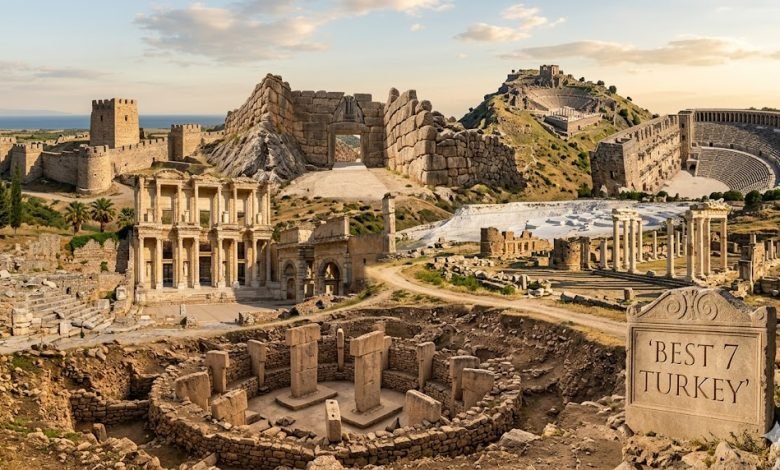
Best 7 Archaeological Sites in Turkey 2026
Welcome back, fellow travelers and history buffs! If you have ever wanted to step into a real-life time machine, Turkey is the ultimate destination. Situated right where the East embraces the West, this country is a living, breathing open-air museum. Today, we are embarking on a journey to uncover the best 7 archaeological sites in Turkey. These are not just piles of old stones; they are the ultimate crossroads of civilizations, telling epic stories of ancient empires, mythical wars, and the very dawn of human religion. Grab your explorer’s hat, and let’s dive into history!
The Best 7 Archaeological Sites in Turkey: A Crossroads of Civilizations
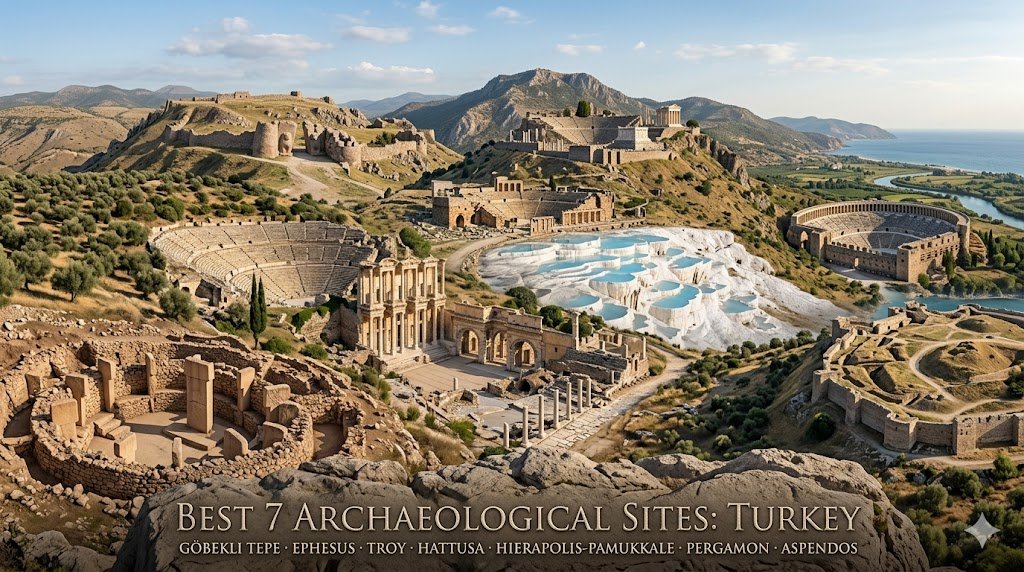
1. Göbekli Tepe: The Dawn of Belief
Starting our list of the best 7 archaeological sites in Turkey is the jaw-dropping Göbekli Tepe. Dating back to 9600 BC, this complex completely rewrote our understanding of human history. Imagine ancient hunter-gatherers, living thousands of years before the invention of the wheel or pottery, erecting massive 6-meter-tall T-shaped limestone pillars. Carved with intricate reliefs of foxes, snakes, and vultures, this site predates Stonehenge by a staggering 6,000 years. Its exceptional preservation over 12 millennia proves a groundbreaking theory: the urge to worship and build sacred architecture actually birthed agriculture, not the other way around.
2. Ephesus: The Gleaming Roman Metropolis
Next, we step into the gleaming marble streets of Ephesus, the undisputed crown jewel of Rome’s Asia Minor (10th century BC–7th AD). Walking through this ancient metropolis, you can almost hear the echoes of history. The iconic Library of Celsus, which once held 12,000 scrolls, and the massive 25,000-seat grand theater are simply breathtaking. Nearby once stood the Temple of Artemis, a lost Wonder of the Ancient World. From the infamous Pauline riots to St. John’s basilica, Ephesus represents a pivotal crossroads where Roman grandeur met the early days of Christianity.
3. Troy: The Immortal City of Homer
No guide to the best 7 archaeological sites in Turkey is complete without Troy. Yes, Homer’s immortal city from the Iliad is a real place! Spanning from 3000 to 1000 BC, Troy features nine layered settlements stacked upon one another. Walking through the ramparts with a view of the sea feels like navigating the chapters of a legendary epic. From Schliemann’s disputed discovery of Priam’s Treasure to the modern wooden horse replica, the UNESCO-protected layers reveal real Bronze Age destruction that matches the legendary Trojan War. The Homeric atmosphere here is truly palpable.
4- Hattusa: The Mighty Hittite Capital
Prepare to be amazed by Hattusa, the formidable capital of the Hittite Empire. As a Bronze Age superpower (1600–1200 BC) whose influence stretched from Greece to Egypt, its sheer scale is mind-boggling. The city is fortified by 40 kilometers of massive walls, featuring iconic lion gates and 1,000 sphinxes. A must-see is the Yazılıkaya rock sanctuary, beautifully adorned with vivid reliefs of over 90 deities. Its vast cuneiform archives rival those of ancient Mesopotamia. After its collapse birthed the Iron Age, this massive city was forgotten for 3,000 years until its rediscovery in the 1830s.
5- Hierapolis-Pamukkale: The Thermal Wonder
Combining natural beauty with ancient history, Hierapolis sits atop the famous “cotton castle” travertine terraces of Pamukkale. This thermal ruin (2nd century BC–6th AD) is a truly unique addition to the best 7 archaeological sites in Turkey. Imagine bathing in the exact same mineral-rich pools that Cleopatra once enjoyed! The site features a spectacular 10,000-seat theater, the eerie Pluto Gate necropolis with 1,200 tombs, and the majestic Apollo Temple. The seamless fusion of breathtaking nature and Roman civilization here is unlike anything else globally.
6- Pergamon Acropolis: The Hellenistic Skyscraper City
Perched high on a mountaintop, the Hellenistic city of Pergamon (3rd century BC) feels like an ancient skyscraper city. The visionary urban planning by Lysimachus was a direct precursor to Renaissance ideals. It boasts the world’s steepest ancient theater, with a dizzying 35-degree incline overlooking the valley below. Trajan’s library once fiercely rivaled the great library of Alexandria, and the majestic Altar of Zeus famous for its frieze depicting gods fighting giants—was originally constructed here.
7- Aspendos Theater: The Acoustic Masterpiece
Saving a spectacular architectural marvel for last, Aspendos boasts the best-preserved Roman theater in the world. Built in 161 AD by the brilliant architect Zenon, this 15,000-seat masterpiece features flawless acoustics, an unbroken stage building, and perfectly intact vomitoria. The engineering was so advanced that the Romans actively copied its design across their entire empire. Remarkably, the theater is still in such pristine condition that it regularly hosts live opera festivals today, making it a timeless showpiece of ancient wealth and art.
Frequently Asked Questions (FAQs)
When is the optimal time to visit Turkey’s archaeological sites?
The best times to explore are during the spring (April-May) and autumn (September-November). The mild weather and blooming landscapes make exploring open-air ruins much more enjoyable and photogenic.
Is it safe for solo travelers to navigate across these sites?
Absolutely. Turkey boasts an excellent tourism infrastructure. Shuttles to famous spots like Ephesus and Göbekli Tepe are highly reliable, while getting a taxi to Troy or Hattusa is perfectly safe and easy for solo adventurers.
How long should a full Turkey ruins itinerary be?
A comprehensive trip requires about 12 to 15 days. A great route includes Istanbul (2 days), Ephesus (3 days), Troy and Gallipoli (2 days), a day trip to Cappadocia, and Göbekli/Hattusa (3 days).
What are the entry fees and rules for photography?
Individual site entries cost between €10 and €25. However, the Museum Pass Turkey (€40 for 120 hours) covers over 300 museums and is highly recommended. Keep in mind that drones are strictly restricted near active digs, and flash photography is forbidden near ancient frescoes.
Conclusion
Turkey is far more than just a beautiful Mediterranean vacation spot; it is a literal bridge through time. Exploring the best 7 archaeological sites in Turkey allows you to walk directly in the footsteps of mighty emperors, fierce gladiators, and our earliest human ancestors. Whether you are captivated by the prehistoric mysteries of Göbekli Tepe or the legendary, war-torn walls of Troy, this crossroads of civilizations will leave you forever inspired. Which of these ancient wonders will you add to your travel itinerary first? Let us know in the comments below!



Everything is very open and very clear explanation of issues. was truly information. Your website is very useful. Thanks for sharing.