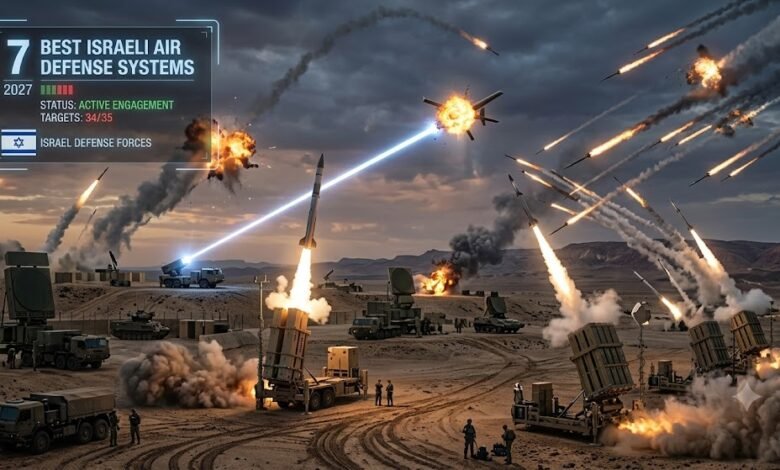
7 Best Israeli Air Defense Systems in 2027
The global air threat picture is changing fast, and Israeli air defense systems remain some of the most studied and respected in the world. In 2027, these systems are expected to play an even larger role in layered defense, countering rockets, cruise missiles, UAVs, loitering munitions, and even select ballistic threats.
What makes Israel’s model so effective is not one “magic” weapon, but a network of sensors, command software, interceptors, and battle-tested tactics. The best systems are designed to work together, which is why they have become a benchmark for modern air defense planning.
1. Iron Dome
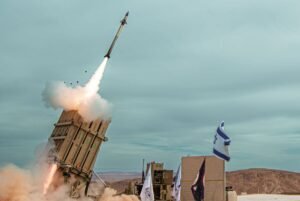
Iron Dome is still the most recognizable name in short-range air defense, and for good reason. It was built to defeat rockets, mortars, and low-cost aerial threats that would otherwise overwhelm civilian areas and critical infrastructure.
Its strength is not just interception performance, but smart engagement logic. The system calculates whether a projectile is likely to hit a populated or strategic area, which helps conserve interceptors and improve cost efficiency.
In 2027, Iron Dome remains a core layer in the family of Israeli air defense systems because it is proven, mobile, and adaptable. It is especially effective when integrated with radar cueing, local warning systems, and higher-tier interceptors for layered coverage.
For operators, the practical lesson is clear: short-range defense is not only about shooting down threats. It is about managing response time, interceptor inventory, and the economics of repeated attacks.
2. David’s Sling
David’s Sling fills the gap between short-range point defense and long-range ballistic defense. It is designed to intercept heavier rockets, cruise missiles, and some tactical ballistic threats that are beyond the reach of Iron Dome.
This middle layer is vital because modern attacks rarely use only one type of weapon. A mixed salvo can include rockets, drones, and precision-guided munitions, so a defense architecture needs a flexible system that can handle different speeds and trajectories.
David’s Sling is one of the most important Israeli air defense systems because it helps prevent overload. By taking on mid-tier threats, it protects expensive strategic interceptors from being used too early in the engagement chain.

Its operational value in 2027 will likely be even greater as cruise missile and loitering-munition threats become more common. For defense planners, it offers a balanced combination of range, precision, and cost control.
3. Arrow 2
Arrow 2 is a high-altitude interceptor built for exo-atmospheric and upper-tier engagements. It is intended to defeat ballistic missiles during the later phases of flight, when the threat is moving fast and covering large distances.
The system’s value lies in its ability to add another layer between an incoming missile and the protected area. That extra layer improves survivability, especially when multiple intercept opportunities are needed against complex missile raids.
In practice, Arrow 2 is one of the key Israeli air defense systems for defending national-scale assets and densely populated regions. It works best as part of a wider network that includes radar detection, battle management, and other interceptors below it.
By 2027, its relevance remains strong because ballistic defense is still one of the hardest problems in air defense. A layered approach with Arrow 2 helps increase the chance of a successful intercept before a warhead reaches vulnerable airspace.
4. Arrow 3
Arrow 3 is designed for even higher-altitude interception than Arrow 2, with a focus on intercepting ballistic missiles outside the atmosphere. That gives defenders a major advantage, because destruction at long range reduces the risk of debris and secondary damage over populated areas.
This system is especially important against advanced regional missile threats. Its hit-to-kill approach is built for precision, and its mission profile reflects the shift toward intercepting threats earlier in their flight path.
Arrow 3 stands out among Israeli air defense systems because it is one of the most strategic tools in the national shield. It is not meant for every threat; it is meant for the most dangerous ones, where altitude, speed, and range matter most.
In 2027, the ability to engage outside the atmosphere remains a major deterrent advantage. For planners, that means better protection for command centers, airbases, and critical infrastructure against long-range missile attacks.
5. Iron Beam
Iron Beam is Israel’s directed-energy answer to high-volume aerial threats. Instead of firing a missile, it uses a laser to destroy or damage incoming targets at short range.
Its biggest promise is cost per shot. When mature and widely fielded, a laser-based layer can reduce dependence on expensive interceptors during large drone or rocket barrages.
Iron Beam matters because the threat environment is moving toward saturation. Cheap drones and repeated launch cycles can drain missile stocks, so a laser layer adds a new kind of resilience to the defense network.
Among Israeli air defense systems, Iron Beam is especially significant for 2027 because it represents the next generation of engagement economics. Even where it is not the primary shield, it can become a powerful supplement to Iron Dome and other point-defense assets.
6. Spyder
Spyder is a mobile air defense system that uses surface-to-air missiles to defeat aircraft, helicopters, UAVs, and certain precision-guided threats. It is valued for rapid deployment and tactical flexibility.
What makes Spyder important is mobility. In modern conflict, fixed sites can become predictable targets, so a mobile system helps protect maneuvering forces, forward bases, and critical nodes that change location.
Spyder expands the reach of Israeli air defense systems beyond national strategic defense and into battlefield air defense. That makes it useful for airbase protection, convoy defense, and distributed force protection concepts.
In 2027, its practical role is likely to remain strong because armies need systems that can move with the fight. For commanders, that means the ability to respond to emerging threats without building a permanent site every time.
7. Barak MX
Barak MX is a modular, networked air and missile defense system that can be tailored to different threat levels. It combines sensors, command software, and interceptor options into a flexible architecture.
Its modularity is one of its biggest strengths. Users can scale the system for point defense, area defense, or broader multi-layer protection, depending on mission needs and budget.
Barak MX belongs on any serious list of Israeli air defense systems because it reflects where modern defense is heading: connected, adaptable, and software-driven. It is especially attractive for forces that need one architecture to address multiple aerial threats.
In 2027, the system’s appeal is likely to grow further as militaries seek integrated solutions rather than isolated launchers. It is a smart choice for organizations that want growth potential without rebuilding their entire defense structure.

Summary Comparison
| System | Primary Role | Best Against | Mobility | Key Strength |
|---|---|---|---|---|
| Iron Dome | Short-range point defense | Rockets, mortars, short-range UAVs | High | Cost-efficient interception of low-altitude threats |
| David’s Sling | Mid-tier air and missile defense | Heavy rockets, cruise missiles, tactical ballistic threats | Moderate | Flexible middle-layer coverage |
| Arrow 2 | Upper-tier ballistic defense | Ballistic missiles in upper atmosphere | Low to Moderate | High-altitude interception layer |
| Arrow 3 | Exo-atmospheric missile defense | Long-range ballistic missiles | Low to Moderate | Early interception outside the atmosphere |
| Iron Beam | Directed-energy short-range defense | Drones, rockets, saturation attacks | High | Very low cost per shot potential |
| Spyder | Tactical mobile air defense | Aircraft, helicopters, UAVs, PGMs | Very High | Fast deployment with battlefield mobility |
| Barak MX | Modular integrated air defense | Multi-domain aerial threats | Moderate | Scalable, networked architecture |
Frequently Asked Questions (FAQs)
Why are Israeli air defense systems so well known?
They are known for layered design, battlefield testing, and strong integration between sensors, command systems, and interceptors.
Which system is best for rockets and short-range threats?
Iron Dome is the most effective and widely recognized option for short-range rocket and mortar defense.
What is the main advantage of Arrow 3?
Arrow 3 can intercept ballistic missiles outside the atmosphere, which improves protection and reduces debris risk near defended areas.
Is directed-energy defense ready for widespread use in 2027?
It is becoming more practical, but lasers like Iron Beam are best viewed as a growing layer that complements missile-based defense rather than replacing it.
Conclusion
The best Israeli air defense systems in 2027 reflect a clear lesson in modern warfare: no single interceptor can solve every threat. The real strength comes from layered defense, smart targeting, and matching each weapon to the right target class.
From Iron Dome’s short-range protection to Arrow 3’s exo-atmospheric reach and Iron Beam’s low-cost laser potential, these Israeli air defense systems show how modern air defense is evolving into a connected, multi-layer shield built for speed, scale, and survival.