Silent Hunters: Best 7 Russian Navy Submarines 2027
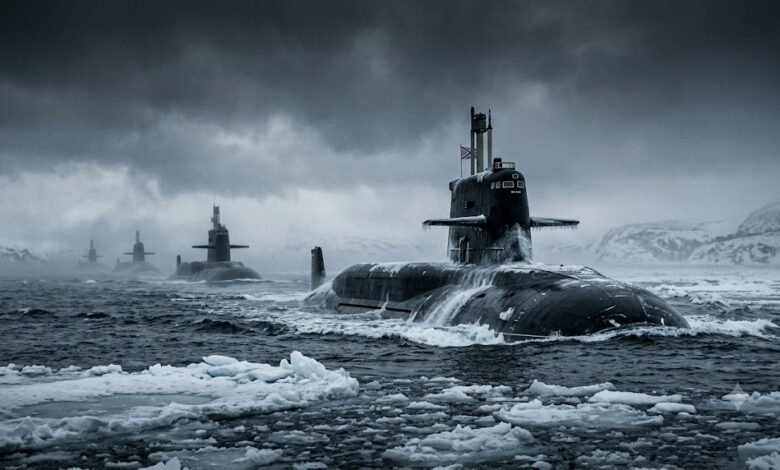
The undersea fleet of the Russian Federation remains one of the most closely watched forces in modern naval warfare. In 2027, the most capable Russian Navy submarines will still matter not just for deterrence, but for intelligence gathering, long-range strike, and sea-denial missions.
This list focuses on the seven submarines and submarine classes most relevant in 2027, based on combat value, modernization status, strategic role, and operational impact. These boats represent a mix of nuclear deterrence, attack capability, and advanced special-mission functions.
1- Borei-A Class SSBN
The Borei-A class remains the backbone of Russia’s sea-based nuclear deterrent in 2027. These ballistic missile submarines are designed to survive in heavily contested waters and deliver second-strike capability if national command systems are under threat.
Their key advantage is a strong balance of stealth, endurance, and missile payload. Each boat can carry Bulava submarine-launched ballistic missiles, making the class central to strategic stability and a core pillar among Russian Navy submarines.
From a technical standpoint, the Borei-A design benefits from improved acoustic quieting, modernized sonar, and better hydrodynamic shaping than earlier Soviet-era SSBNs. For analysts, the class matters because it gives Russia a survivable nuclear platform that can operate under Arctic ice or in protected bastions.
For practical military planning, the Borei-A is not meant for aggressive maneuvers near enemy shores. Its real value is persistence, concealment, and assured retaliation.
2- Yasen-M Class SSGN/SSN
The Yasen-M class is widely regarded as the most dangerous multipurpose submarine family in the Russian fleet. It combines cruise missile firepower, anti-ship capability, land-attack options, and sophisticated hunter-killer roles.
Compared with older attack submarines, the Yasen-M offers better stealth, more automation, and a highly flexible weapons suite. Its ability to launch Kalibr, Oniks, and in some cases hypersonic-capable Zircon-class missiles makes it a major threat to surface groups and shore targets alike.
In 2027, this class will likely be the most scrutinized among Russian Navy submarines because it bridges strategic and tactical missions. It can shadow carrier strike groups, protect Russian SSBN patrol zones, and threaten maritime chokepoints from long range.
Operationally, the Yasen-M’s strength lies in mission flexibility. A commander can use it for sea control, reconnaissance, or precision strike, which makes it far more versatile than a single-role submarine.

3- Borei Class SSBN
The original Borei class still deserves a place on this list because it remains operationally important and still contributes to the Russian nuclear deterrent. Although the Borei-A is the newer and quieter evolution, the baseline Borei boats continue to provide strategic value.
These submarines were a major step forward from Russia’s older Delta-class ballistic missile boats. They helped modernize the deterrent force with better survivability, improved missile integration, and lower crew burden.
In 2027, the class remains relevant because submarines serve long lifecycles, and older strategic boats are often retained until newer units fully replace them. Even if they are less advanced than the Borei-A, they still represent powerful sea-based nuclear platforms.
Their operational relevance is also political. A visible and functioning Borei fleet signals that Russia maintains a credible strategic posture without relying solely on land-based systems.
4- Akula Class SSN
The Akula class is one of the most famous attack submarine families ever built in Russia, and several boats may still remain relevant in 2027 after refits and service-life extensions. While older than the Yasen-M, the Akula remains a respected and capable platform when maintained properly.
Its original design focused on quieting improvements over earlier Soviet attack boats, giving it better survivability and greater tracking ability in submarine warfare. For decades, the class was considered a serious peer threat to Western ASW forces.
In modern terms, the Akula is useful because it can still conduct patrol, escort, and training missions, and some hulls may carry upgraded electronics or weapon systems. That means it can still add value even if it no longer represents the cutting edge.
Among Russian Navy submarines, the Akula class shows an important reality of naval power: an older boat with good upgrades can remain useful if it is maintained, crewed well, and assigned the right mission.
5- Oscar-II Class SSGN
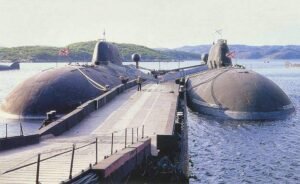
The Oscar-II class is built around one concept: destroy high-value enemy surface assets with overwhelming missile salvos. These large cruise missile submarines were designed during the Cold War to threaten carrier battle groups and remain relevant in 2027 as heavy strike platforms.
Their size allows for a large weapons load, and that load gives the class a unique tactical profile. In practice, the Oscar-II can fire a massed salvo intended to saturate defenses, especially when supported by targeting from maritime patrol aircraft, satellites, or other sensors.
Although it is not as modern or quiet as newer designs, the class remains dangerous because mission-specific firepower still matters. A submarine does not need to be the quietest boat at sea to be operationally relevant if it can launch a devastating strike.
For planners assessing Russian Navy submarines, the Oscar-II is a reminder that saturation attack remains a real naval concept. It is especially dangerous in a layered anti-access strategy.
6- Improved Kilo Class SSK
The Improved Kilo class is a diesel-electric submarine design that has gained a strong reputation for quietness in coastal and littoral operations. In 2027, it continues to be one of Russia’s most useful non-nuclear submarine types.
Its biggest strength is low acoustic signature, especially when operating on battery power. That makes it a serious threat in confined seas, chokepoints, and near-shore patrol zones where stealth can outweigh speed and endurance.
These boats are also valuable because they are relatively economical to operate compared with nuclear submarines. That means they can be deployed more widely, used for training, and assigned to regional defense tasks without consuming the same strategic resources.
In practical terms, the Improved Kilo is ideal for ambush tactics, mine warfare, and cruise missile launches from concealed positions. It remains one of the most effective conventional Russian Navy submarines for day-to-day operational use.
7- Lada Class SSK
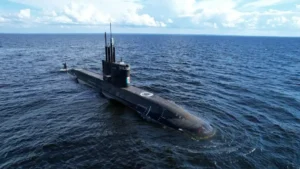
The Lada class represents Russia’s effort to build a more advanced conventional submarine than the Kilo family. In 2027, its importance lies less in numbers and more in future growth, technology testing, and eventual replacement value.
The class was designed with a stronger focus on automation, reduced crew requirements, and improved stealth. It was intended to benefit from modern sonar, updated combat systems, and better battery performance.
Although development has faced delays and technical challenges, the Lada class still matters because it reflects the direction of Russian undersea design. If the program continues to mature, it could become a much more capable patrol asset for coastal and regional waters.
Among Russian Navy submarines, Lada is important as a bridge between older diesel-electric designs and a more modern conventional submarine doctrine. Its long-term relevance will depend on how well Russia resolves reliability, sensor, and propulsion issues.
Summary Comparison
| Submarine Class | Type | Primary Role | Main Strength | 2027 Relevance |
|---|---|---|---|---|
| Borei-A Class | SSBN | Nuclear deterrence | Quiet strategic patrols | Very high |
| Yasen-M Class | SSGN/SSN | Strike and hunter-killer | Multi-mission missile power | Very high |
| Borei Class | SSBN | Nuclear deterrence | Proven strategic capability | High |
| Akula Class | SSN | Attack and escort | Enduring upgrade potential | Moderate to high |
| Oscar-II Class | SSGN | Carrier threat and strike | Heavy missile salvo capacity | High |
| Improved Kilo Class | SSK | Coastal defense and ambush | Very quiet conventional operations | High |
| Lada Class | SSK | Future conventional patrol | Automation and stealth design | Moderate |
Frequently Asked Questions (FAQs)
Which Russian submarine class is the most advanced in 2027?
The Yasen-M class is generally the most advanced multipurpose attack submarine in the fleet, while the Borei-A class is the most advanced strategic deterrent boat.
Are older Russian submarines still relevant in 2027?
Yes. Older classes like the Akula and Oscar-II can still matter if they receive upgrades, retain usable sensors, and are assigned the right missions.
Why are diesel-electric submarines still important?
Diesel-electric boats like the Improved Kilo and Lada can be extremely quiet in coastal waters, making them very effective for ambush, patrol, and regional defense.
What makes Borei-A so important to Russia?
Borei-A provides a survivable sea-based nuclear deterrent. That makes it one of the most strategically valuable Russian Navy submarines in service.
Conclusion
The strongest Russian Navy submarines in 2027 will not all serve the same purpose, but together they form a layered undersea force built for deterrence, strike, stealth, and regional control. From the nuclear-powered Borei-A and Yasen-M to the quiet Improved Kilo, each platform plays a specific role in Russia’s broader maritime strategy.
What makes this fleet especially important is its mix of old and new. Russia continues to rely on proven hulls, modernized systems, and new designs to keep its submarine arm relevant in high-end naval competition.