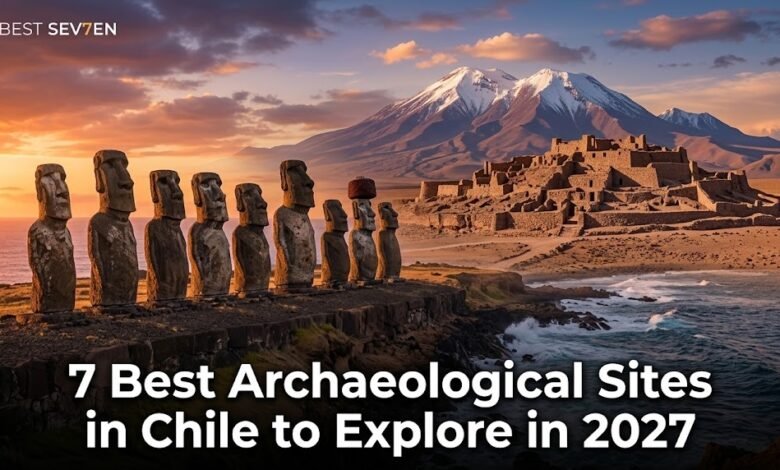
7 Best Archaeological Sites in Chile to Explore in 2027
Chile is one of South America’s most underrated heritage destinations. From the high desert of the north to the cultural landscapes of the far south, the country preserves a remarkable record of ancient migration, adaptation, trade, and belief systems. For travelers who want more than scenery, the Archaeological Sites in Chile offer a rare chance to walk through living history.
What makes Chile especially valuable for archaeology is its geographic diversity. The Atacama Desert, coastal valleys, Andean plateaus, and island communities each hold traces of distinct cultures that shaped the region long before modern borders existed. In 2027, these sites remain essential for anyone interested in pre-Columbian societies, early human settlement, and indigenous heritage.
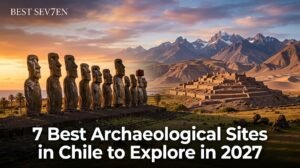
the 7 Best Archaeological Sites in Chile to Explore in 2027
1. Taltal and the Coastal Desert Ruins
Taltal is one of the most important archaeological zones in northern Chile, especially for understanding how ancient people survived in one of the driest places on Earth. The area contains shell middens, habitation sites, tools, and burial evidence linked to early coastal populations.
The key value of Taltal lies in its adaptation story. Researchers have found proof that marine resources supported human life here for thousands of years, showing a strong connection between the ocean and desert survival. For visitors, the site offers a deeper understanding of how the Archaeological Sites in Chile reflect resilience rather than just monumentality.
Travelers should go with a knowledgeable local guide or academic tour when possible. Many remains are fragile, and the best experience comes from learning how to read the landscape, not just viewing isolated artifacts.
2. Pukará de Quitor
Pukará de Quitor is a powerful hilltop fortress near San Pedro de Atacama. Built by the Atacameño people, it served both defensive and strategic purposes during periods of conflict and regional pressure.
Its stone walls and terraced layout show advanced planning for desert defense. The fortress also reveals how communities used elevated ground, narrow paths, and natural barriers to control access and protect supplies. Among the Archaeological Sites in Chile, Quitor is especially useful for understanding pre-Hispanic military architecture.
A visit here is best done in the morning or late afternoon, when the light is softer and the canyon setting becomes easier to appreciate. Bring water, wear sturdy shoes, and take time to observe the alignment of walls with the landscape, because that relationship is central to the site’s meaning.
3. Valle de Azapa
Valle de Azapa, near Arica, is a major archaeological corridor with evidence of very early coastal settlement, agriculture, and funerary traditions. It is closely associated with the Chinchorro culture, famous for creating the world’s oldest known artificial mummies.
This valley is significant because it documents how people developed complex mortuary practices long before many better-known ancient civilizations. The preservation conditions in the desert helped protect textiles, bones, fishing tools, and mummified remains, offering exceptional research value.
For visitors in 2026, Valle de Azapa is one of the most educational Archaeological Sites in Chile because it combines museum interpretation with landscape context. A strong itinerary includes both the site itself and the local museum collections, which help explain the timeline and cultural importance of the discoveries.
4. Geoglyphs of Pintados
The geoglyphs of Pintados, located in the Tarapacá region, are among the most visually striking ancient expressions in Chile. These giant figures were made by arranging stones and scraping desert surfaces to form animals, humans, and geometric patterns.
Their purpose was likely linked to trade routes, territorial marking, and ritual communication. Because they sit along ancient caravan paths, the geoglyphs show how people moved goods and ideas across the desert long before modern roads existed. They are a reminder that the Archaeological Sites in Chile are not only burial places or ruins, but also communication systems.
When visiting Pintados, the main priority is perspective. The figures are best appreciated from designated viewpoints, where their scale and pattern become visible against the plain. This is a site where light, distance, and silence all matter to the experience.
5. San Pedro de Atacama Archaeological Museum and Nearby Cultural Sites
Although many visitors focus on San Pedro de Atacama as a desert town, the surrounding area contains a dense network of archaeological remains tied to the Atacameño people and earlier communities. The museum and nearby cultural sites provide essential context for understanding desert life, trade, and spiritual practices.
This region is valuable because it links artifacts with landscape. Pottery, textiles, tools, and burial items show how people managed water, used llama caravans, and adapted to high-altitude conditions. The broader archaeological setting makes this one of the most accessible Archaeological Sites in Chile for general travelers and serious learners alike.
To get the most from a visit, combine the museum with nearby ruins, petroglyph areas, and guided interpretive walks. That approach gives you a better sense of how settlements, sacred places, and trade networks worked together in the Atacama.
6. Isla de Chiloé and the Prehistoric Coastal Heritage
Chiloé is often known for its folklore and wooden churches, but its deeper archaeological value is equally important. The island preserves evidence of early marine adaptation, shellfish gathering, small-scale farming, and long-term indigenous occupation.
The archaeological record here reflects a culture shaped by water. Communities used coastal and forest resources in a highly efficient way, and their material remains reveal a balance between mobility and settlement. Compared with desert sites, Chiloé shows the southern side of the Archaeological Sites in Chile story, where wetlands, sea, and temperate forests influenced daily life.
Visitors should look beyond the most obvious landmarks and explore local heritage centers, small museums, and shoreline areas with archaeological interpretation. The island’s strength is in its layered history, not in one single monument.
7. Monte Verde
Monte Verde is one of the most important prehistoric sites in the Americas. Located in southern Chile, it provided strong evidence that humans were present in the region much earlier than many older theories suggested.
The site became globally famous because it challenged outdated ideas about the timeline of human migration into the Americas. The remains of structures, tools, plant material, and preserved organic evidence show a highly adaptable population living in a complex environment. For scholars, Monte Verde is among the most influential Archaeological Sites in Chile and beyond.
A visit here is especially meaningful for travelers who want to understand archaeology as a scientific process. The site demonstrates how evidence can reshape history when it is carefully excavated, dated, and interpreted. Even if the remains are not as visually dramatic as a fortress or geoglyph, their academic importance is immense.
Frequently Asked Questions (FAQs)
What is the best time to visit archaeological sites in Chile?
The best time is usually from March to November, depending on the region. Northern desert sites are more comfortable in cooler months, while southern sites are easier to explore in mild weather and with fewer crowds.
Are archaeological sites in Chile suitable for family travel?
Yes, many sites are suitable for families, especially those with museums or guided visitor areas. Choose places with clear paths, shaded stops, and educational displays to make the experience easier for children.
Do I need a guide to visit these sites?
A guide is not always required, but it is strongly recommended for many Archaeological Sites in Chile. Guided visits add context, help protect fragile remains, and make it easier to understand what you are seeing.
How should visitors behave at archaeological sites?
Stay on marked paths, do not touch ruins or artifacts, and never remove anything from the site. Respect for heritage is essential because these places are part of living indigenous and national history.
Conclusion
Chile offers a rare archaeological journey across deserts, valleys, coasts, islands, and southern forests. Each site in this guide reveals a different chapter of human adaptation, belief, and survival, making the country an outstanding destination for heritage travel in 2026.
Whether you are drawn to early coastal settlements, ancient fortresses, desert geoglyphs, or world-changing prehistoric evidence, the Archaeological Sites in Chile reward curiosity with depth, context, and perspective. For travelers who want history that feels grounded in the land itself, Chile is one of the best places in the world to explore.