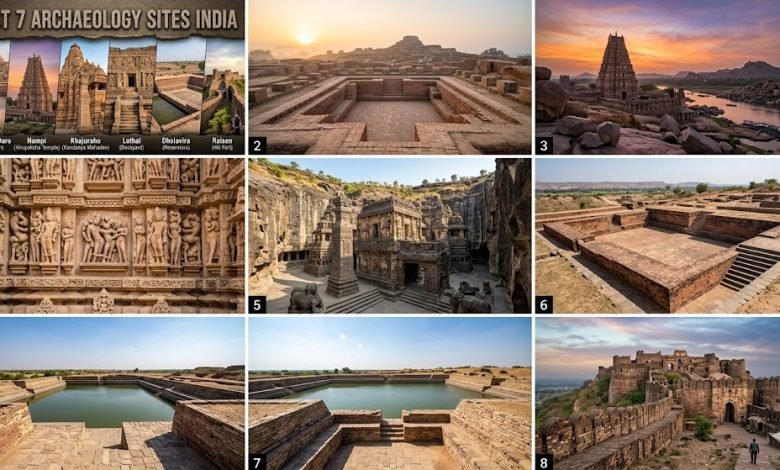
Best 7 Archaeological Sites in India 2026
Best 7 Archaeological Wonders in India – Eternal Empire Marvels Revealed
Planning a trip to South Asia? Exploring the most magnificent archaeological sites in India offers a breathtaking journey through 5,000 years of history. From marble mausoleums and hidden cave monasteries to colossal stone chariots, these destinations blend deep spiritual roots with absolute engineering genius. As you map out your adventures for 2026, this guide highlights the artistic mastery and historical depth of India’s most iconic ancient ruins.
7 Best Archaeological Sites in India: Iconic Ancient Ruins 2026
1. Taj Mahal (Agra)
A UNESCO World Wonder and the ultimate symbol of love, the Taj Mahal (1632–1653) is a marble masterpiece built by Shah Jahan. Featuring perfect symmetry, intricate Pietra dura inlays using 28 types of precious gems, and stunning Charbagh gardens, it remains the crown jewel of all archaeological sites in India. Pro tip: visit during a full moon to see the marble glow with an ethereal beauty.
2. Hampi Ruins (Vijayanagara)
Once the capital of a mighty Hindu empire, Hampi is an apocalyptic ghost city featuring over 1,600 monuments across 41 square kilometers. Key highlights include the towering Virupaksha Temple and the musical pillars of the Vittala Temple. Walking through these ancient bazaars and aqueducts feels like stepping back into the 16th century, solidifying Hampi’s status as a masterpiece of Hindu architecture.
3. Ajanta Caves (Maharashtra)
Dating from the 2nd century BC to the 6th century AD, the Ajanta Caves represent the pinnacle of Buddhist cave art. These 30 rock-cut monasteries house over 5,000 square meters of breathtaking frescoes depicting Bodhisattvas and royal life. Sealed away for nearly 1,000 years, the vibrant paintings found here rival those of the Italian Renaissance.
4. Ellora Caves (Maharashtra)
The Ellora Caves stand as a testament to religious harmony, blending Buddhist, Hindu, and Jain traditions. The crown jewel is the Kailasa Temple (Cave 16), a single-monolith structure excavated top-down that rivals Egypt’s Abu Simbel. It is a stunning example of interfaith devotion and ancient architectural ambition that must be seen to be believed.
5. Khajuraho Temples (Madhya Pradesh)
Famous for their intricate sculptures, the Khajuraho temples of the Chandela dynasty are among the most provocative archaeological sites in India. Of the 85 original temples, 25 remain, including the Kandariya Mahadeva temple. These UNESCO-listed “love temples” are celebrated for their detailed tantric symbolism and artistic celebration of human life cycles.
6. Mahabalipuram (Tamil Nadu)
This 7th-century Pallava dynasty site is the heart of Dravidian temple architecture. It features the five monolithic Pancha Rathas chariots and the massive “Descent of the Ganges” bas-relief, which stretches 27 meters long. The Shore Temple, which has stood against the tides for 1,300 years, remains one of the most resilient coastal structures in history.

7. Konark Sun Temple (Odisha)
Known as the “Black Pagoda,” this 13th-century temple is designed as a colossal chariot for the sun god, Surya. With 24 intricate stone wheels that function as accurate sundials and seven grand horses, it is the largest chariot-style temple in the world. Its sheer scale and magnetic construction make it a fascinating final stop on any historical tour.
Frequently Asked Questions (FAQs)
What is the optimal season to visit archaeological sites in India?
October to March offers the most pleasant temperatures, making it ideal for exploring these historical ruins.
Is it safe to visit remote archaeological sites in India?
Yes, sites like Hampi and Ajanta are well-connected by trains and reliable transport apps, though it is always best to plan your routes in advance.
How long should an India ruins itinerary take?
A comprehensive trip covering Agra, Hampi, Ajanta-Ellora, Khajuraho, and Mahabalipuram typically requires 18–21 days.
Are there annual passes available for these monuments?
Yes, the Archaeological Survey of India (ASI) offers an annual pass for approximately ₹1,250, which covers entry to over 3,600 monuments.
What are the photography rules at these sites?
Tripods are generally allowed outside, but indoor photography may be restricted. Always check specific site regulations, especially at the Taj Mahal.
Conclusion:
Whether you are a professional researcher or a casual traveler, these archaeological sites in India provide a profound connection to our collective human past. From the architectural precision of the Taj Mahal to the spiritual serenity of the Ajanta Caves, India’s ruins offer an unforgettable experience. As you plan your 2026 itinerary, ensure these seven wonders are on your list. If you love discovering ancient heritage, be sure to check out our other historical travel guides on the site!