
Eye of Horus: Best 7 Egyptian Air Defense Systems 2027
Egypt has built one of the most layered and strategically important air defense networks in the Middle East and North Africa. The country’s defense planning reflects a long history of regional conflict, rapid modernization, and the need to protect critical cities, air bases, industrial zones, and the Suez corridor.
In 2027, Egyptian air defense systems remain a key part of national deterrence. They combine Soviet-era heritage, American legacy platforms, and newer Russian, Chinese, and European technology into a multi-tier shield that is designed to detect, track, and engage threats at different ranges and altitudes.

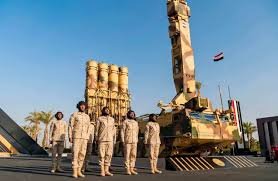
1- S-300VM Antey-2500
The S-300VM Antey-2500 is one of the most capable long-range systems in Egypt’s inventory and a major pillar in modern layered defense. It is designed to counter aircraft, cruise missiles, and some ballistic missile threats, which makes it highly valuable in a region where air and missile threats can overlap.
Its strength lies in range, mobility, and multi-target engagement. In operational terms, the system can protect large strategic zones and support anti-access coverage around key military and industrial assets, especially when integrated with other Egyptian air defense systems. It also benefits from strong radar support and the ability to engage multiple targets in a short window.
From a planning perspective, the S-300VM is important because it raises the cost of any hostile air operation. It forces an opponent to think carefully about route planning, stand-off weapons, and electronic warfare, which makes it one of the most respected systems in Egypt’s higher-tier shield.
2- Buk-M2E
The Buk-M2E fills the vital medium-range layer and is one of the most flexible systems in service. It is effective against aircraft, helicopters, UAVs, and cruise missiles, making it especially relevant in 2027 as drone threats continue to grow.
Unlike fixed-point systems, the Buk-M2E is highly mobile and suited to maneuver warfare, convoy protection, and the defense of forward-deployed forces. Its ability to detect and engage targets quickly gives Egyptian commanders a strong response option against low-flying threats that may attempt to exploit terrain or gaps between long-range coverage zones.

In practice, Buk-M2E works best when networked with early warning sensors and command centers. That integration improves reaction time and prevents enemy aircraft from slipping through between engagement layers, which is exactly why it remains one of the most important Egyptian air defense systems.
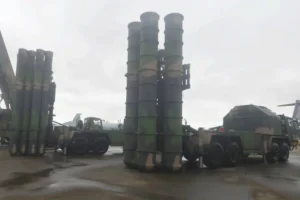
3- HQ-9B
The HQ-9B represents a significant long-range and high-altitude engagement capability. It has become notable in regional defense circles because it combines modern radar technology, broad coverage, and a credible deterrent effect against advanced air threats.
For Egypt, this system is especially useful for protecting strategic infrastructure and reinforcing long-range coverage in areas where continuous surveillance is essential. It is often discussed in the same category as other advanced strategic SAM systems because it can support layered denial over large geographic spaces.
The main advantage of the HQ-9B is not only its engagement envelope but also its role in networked defense. When linked with other sensors and command elements, it helps create redundancy, which is critical in real conflict conditions where jamming, decoys, and saturation attacks are likely. Among Egyptian air defense systems, it strengthens depth and resilience.
4- Tor-M2E
The Tor-M2E is one of Egypt’s strongest point-defense systems. It is built to stop precision-guided weapons, drones, helicopters, and low-flying aircraft at short range, which makes it ideal for defending air bases, command posts, and high-value infrastructure.
Its biggest advantage is reaction speed. The system is designed for rapid target detection and engagement, which matters in a modern battlefield where threats often arrive with very little warning. That makes Tor-M2E a practical answer to UAV raids and pop-up missile attacks.
In layered defense planning, point-defense systems like the Tor-M2E are the last shield before a target is hit. They are not meant to replace long-range platforms, but to complement them. In a dense air defense architecture, their value is enormous because they help close the gaps that no long-range system can fully cover.
5- Pantsir-S1
The Pantsir-S1 has become one of the most recognized short-range air defense systems in the region. It combines guns and missiles, which gives it a mixed-engagement capability that is useful against drones, helicopters, cruise missiles, and low-altitude aircraft.
This system is especially effective when protecting radar sites, missile batteries, and other sensitive assets that may become targets during the opening phase of a conflict. Its guns can be useful against close-in threats, while its missiles add another layer for engaging incoming air objects before they reach the defended point.
For Egyptian planners, the value of Pantsir-S1 is its flexibility. It can move with mobile formations, support strategic fixed sites, and serve as a close-in guard for more valuable air defense assets. That makes it one of the most practical Egyptian air defense systems for dense and fast-changing threat environments.
6- MIM-23 Hawk XXI
The MIM-23 Hawk XXI remains a legacy system, but it continues to play a meaningful role in Egypt’s layered air defense structure. Modern upgrades have extended its service life and improved its usefulness against aircraft and some low-altitude threats.
Its endurance is an important story in itself. Many countries have retired older medium-range systems, but Egypt has kept the Hawk family relevant through upgrades, maintenance, and integration into broader defense planning. That kind of continuity can be useful when a military wants depth without relying entirely on new imports.
In 2027, the Hawk XXI is best understood as a support layer. It may not match the most advanced modern systems, but it still contributes to area defense, especially when paired with radar networks and modern command-and-control architecture. Older systems like this can still matter when they are properly sustained.
7- Crotale NG
The Crotale NG is a short-range air defense system that is valued for speed, precision, and strong low-altitude performance. It is particularly useful against aircraft, helicopters, and some airborne munitions that fly low and fast.
This system is often associated with the defense of airfields and critical assets where close protection is needed. Its compact design and rapid engagement capability make it a dependable choice for protecting specific points that cannot afford any delay in response.
The Crotale NG also highlights a key principle in modern air defense: not every threat should be handled by the same layer. By combining Crotale NG with longer-range and medium-range systems, Egypt can build a more efficient defense picture and avoid wasting high-end interceptors on low-cost threats. That approach is increasingly important in 2027.
Summary Comparison
| System | Range Class | Main Strength | Best Use Case | Threats Handled |
|---|---|---|---|---|
| S-300VM Antey-2500 | Long-range | High-altitude and ballistic defense | Strategic area protection | Aircraft, cruise missiles, some ballistic missiles |
| Buk-M2E | Medium-range | Mobility and multi-target response | Maneuver forces and regional coverage | Aircraft, UAVs, cruise missiles |
| HQ-9B | Long-range | Broad coverage and networked defense | Strategic infrastructure protection | Aircraft, cruise missiles, advanced air threats |
| Tor-M2E | Short-range | Fast reaction and point defense | Air bases and key facilities | UAVs, helicopters, precision weapons |
| Pantsir-S1 | Short-range | Guns + missiles versatility | Close protection of critical assets | Drones, helicopters, low-flying aircraft |
| MIM-23 Hawk XXI | Medium-range | Upgraded legacy capability | Layered support and area defense | Aircraft, some low-altitude threats |
| Crotale NG | Short-range | Quick interception of low-altitude targets | Airfields and fixed-site defense | Aircraft, helicopters, munitions |
Watch this professional analysis of Egypt’s air defense capabilities to see these systems in action:
Frequently Asked Questions (FAQs)
Why are layered Egyptian air defense systems important?
They allow different systems to handle different threats by range and altitude, which improves efficiency and reduces gaps in coverage.
Which system is best for drone defense?
Tor-M2E and Pantsir-S1 are especially useful against drones because they react quickly and are designed for short-range engagement.
Are older systems like Hawk still relevant in 2027?
Yes. When upgraded and integrated properly, older systems can still provide useful medium-range coverage and support layered defense.
What makes long-range systems so valuable?
They force hostile aircraft to stay farther away, use more expensive weapons, and operate under greater risk, which strengthens deterrence.
Conclusion
The strength of Egyptian air defense systems in 2027 comes from balance, not from a single weapon. Egypt’s network works because it combines long-range denial, medium-range mobility, and short-range point protection into one layered structure.
That approach makes the country’s air defense posture more resilient, more flexible, and harder to suppress. In a region shaped by drones, missiles, stealth, and electronic warfare, that kind of depth is exactly what modern defense demands.