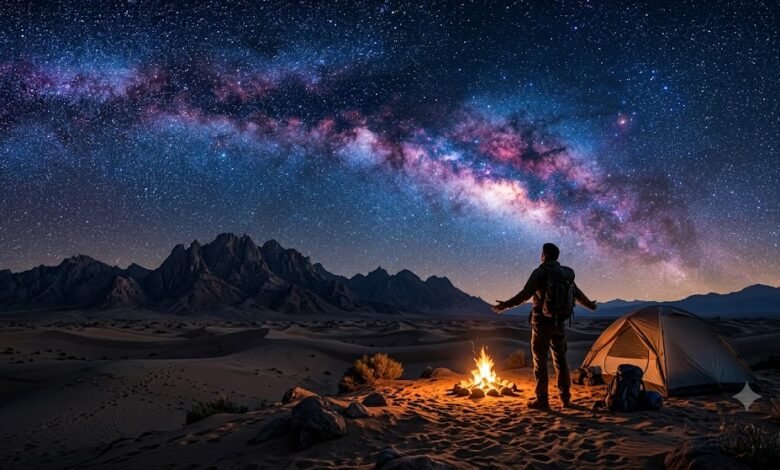
7 Best Stargazing Destinations on Earth for 2026
The night sky still rewards travelers who know where to look. In 2026, the best places to chase darkness are not just scenic; they are carefully chosen for low light pollution, clear air, stable weather, and strong protected-sky policies.
This guide highlights seven world-class Stargazing Destinations that offer a serious chance to see the Milky Way, meteor showers, planets, and even faint deep-sky objects with the naked eye or through a small telescope. Whether you are planning a dedicated astro-trip or adding one night under the stars to a larger journey, these locations stand out for both beauty and viewing quality.
1- Atacama Desert, Chile
The Atacama Desert is one of the driest places on Earth, and that dryness is a major reason it ranks among the top Stargazing Destinations. With very little cloud cover, high altitude, and almost no humidity in many areas, the sky often stays crisp and dark for most of the year.
Sites near San Pedro de Atacama are especially popular because they combine remote darkness with practical access to tours, observatories, and lodging. The region is also home to some of the world’s most advanced astronomy facilities, which is a strong sign of how clean and stable the sky really is.
For travelers, the main advantage is consistency. You are not gambling on a rare clear night; you are choosing a desert climate built for sky watching.
Plan for cold nights, even after hot days, and bring layers, red-light flashlights, and a tripod if you want to photograph the Milky Way. If you want the best possible contrast, visit during the new moon and avoid nights with high dust or wind.
2- Aoraki Mackenzie Dark Sky Reserve, New Zealand
Aoraki Mackenzie is one of the darkest protected areas in the Southern Hemisphere. It is a certified Dark Sky Reserve, which means local communities actively limit light pollution to preserve the night sky.
The reserve sits in the South Island’s high country and offers wide-open views of the cosmos. From here, Southern Hemisphere highlights such as the Southern Cross, the Magellanic Clouds, and the brilliant center of the Milky Way are easy to appreciate.
This is one of the rare Stargazing Destinations where the landscape itself improves the experience. Lakes, mountains, and open plains create a dramatic setting that makes the sky feel even larger.
For the best results, stay inside or near the reserve rather than commuting from brighter towns. Weather can change quickly in alpine regions, so build flexibility into your plan and keep an eye on cloud forecasts.
3- NamibRand Nature Reserve, Namibia
NamibRand is a private reserve in the Namib Desert and one of the most respected dark-sky areas in Africa. Its vast open spaces, low population density, and strong conservation policies make it ideal for long-exposure astrophotography and naked-eye viewing alike.
The desert environment delivers an almost surreal level of contrast. Once your eyes adjust, the sky can appear layered with stars from horizon to horizon, and the Milky Way often looks bright enough to cast a faint shadow.
This destination is especially attractive for travelers who want both wilderness and comfort. Many lodges in and around the reserve are designed with astronomy in mind, so you can combine guided sky sessions with high-end safari-style lodging.
Bring a warm jacket, lens cloths, and extra batteries, because desert nights can be cooler than expected and fine dust can affect gear. For serious observers, this is one of the most rewarding Stargazing Destinations in the world.
4- Mauna Kea, Hawaii, USA
Mauna Kea rises above much of the atmosphere, which is why it is famous among astronomers. At nearly 14,000 feet, the summit region offers thin air, low humidity, and exceptional clarity on many nights.
The mountain is also home to major observatories, reinforcing its reputation as a premium astronomy site. Even if you do not go to the summit, nearby visitor areas can still provide excellent sky views with more manageable altitude conditions.
The experience here is about more than darkness. It is about precision, where planets, stars, and even faint deep-sky objects can appear remarkably sharp when the air is steady.
Altitude is the main risk, so visitors should acclimatize, hydrate well, and avoid rushing to the summit. Check local access rules carefully, since conditions and permissions can change, and respect the cultural significance of the mountain at all times.
5- Death Valley National Park, USA
Death Valley is not just famous for extreme heat. It is also one of the best dark-sky environments in North America, with huge open landscapes and very little artificial light in and around the park.
The park’s scale matters. When you stand in a wide valley with mountain ranges around you, the sky feels enormous, and the absence of urban glow makes stars appear brighter and more numerous.
This is one of the Stargazing Destinations where accessibility is a major plus. You can reach many viewing areas by road, and there are ranger programs, night hikes, and seasonal astronomy events that help first-time visitors understand what they are seeing.
Because daytime temperatures can be severe, the best stargazing usually happens in cooler seasons. Bring water, know the nearest services, and avoid driving long distances after dark if you are tired from the heat.
6- Elqui Valley, Chile
Elqui Valley combines clear skies, mountain scenery, and a well-developed astronomy culture. The region has become a favorite among travelers who want observatory access without sacrificing comfort or local food, wine, and culture.
The valley benefits from the same high, dry conditions that make northern Chile famous for astronomy. Many local operators offer telescope sessions, sky tours, and education-focused experiences that are especially good for beginners.
This is a smart choice if you want more than a casual look at the stars. You can learn how to identify constellations, understand planetary motion, and improve your ability to read the night sky with just a guide and a simple star map.
Choose a moonless night and, if possible, stay several nights to improve your chances of a perfect forecast. For travelers building an astro itinerary, Elqui Valley is one of the most balanced Stargazing Destinations because it blends science, scenery, and hospitality.
7- Westhavelland Dark Sky Reserve, Germany
Westhavelland is one of Europe’s best-known dark-sky reserves and a reminder that great stargazing is not limited to remote deserts. It lies west of Berlin and offers a protected landscape where light pollution is carefully managed.
What makes this site special is accessibility. Travelers in Europe can reach it relatively easily while still enjoying genuinely dark skies, which is rare on a crowded continent.
The reserve is ideal for people who want an efficient astro break without crossing oceans. With careful planning, you can enjoy a short trip focused on meteor showers, the Milky Way, or simple naked-eye observing.
Because European weather can be variable, timing is important. Check cloud cover, humidity, and moon phase before you go, and choose a viewing area with open horizons and minimal local glare.
How to Choose the Right Stargazing Destination
Not every dark place is equally good for astronomy. A truly strong site combines low light pollution, low cloud risk, stable air, and safe access after dark.
If your goal is astrophotography, look for dry climates, high elevations, and predictable weather patterns. If you want a family trip, focus on easy roads, visitor facilities, and ranger-led programs.
It also helps to match your destination to the season. A place that is excellent in winter may be cloudy in summer, so always check the regional sky calendar before booking.
Frequently Asked Questions (FAQs)
What makes a destination good for stargazing?
The best places have very low light pollution, clear skies, and stable weather. High altitude and dry air can also improve visibility.
Do I need a telescope to enjoy these destinations?
No. Many of the best sights, including the Milky Way, meteor showers, and bright planets, can be enjoyed with the naked eye. A small pair of binoculars can add a lot.
When is the best time to go stargazing?
New moon periods are ideal because the sky is darkest. Dry seasons usually offer the clearest views, but the best timing depends on the local climate.
Are these destinations safe for beginners?
Yes, but preparation matters. Bring warm clothing, water, a flashlight with red mode, and check road and weather conditions before heading out after dark.
Conclusion
The best stargazing trips are built on patience, planning, and the right location. From desert reserves to high mountains and protected dark-sky parks, the seven Stargazing Destinations in this guide offer some of the clearest and most memorable night skies on the planet.
If you choose carefully, travel during the right moon phase, and prepare for local conditions, 2026 can be an unforgettable year to reconnect with the universe above.