
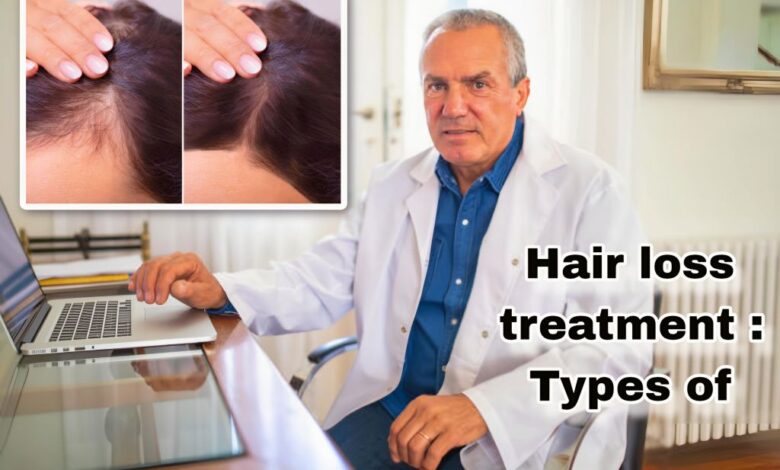
Hair Loss Treatment in 2026: The Ultimate Medical Guide
Dealing with thinning hair or sudden shedding can be an emotionally overwhelming experience. However, approaching hair loss treatment in 2026 starts with one golden rule: you must identify the exact type of hair loss first. This is because the optimal clinical approach for genetic thinning is fundamentally different from treating sudden shedding triggered by extreme psychological stress or an autoimmune flare-up. Today, evidence-based dermatology has evolved significantly. Modern choices range from classic, time-tested topical solutions to groundbreaking, newly cleared cellular therapies.
Navigating the world of hair loss treatment in 2026 requires a clear understanding of your scalp’s biology, proper diagnostic tools, and a realistic expectation of how proven treatments work together to restore hair density.
What Diagnosis Looks Like Today
Before rushing to buy expensive topical treatments or viral supplements, a formal clinical workup is crucial. Dermatologists typically diagnose the root cause of hair thinning by combining a detailed medical history (evaluating timing, sudden lifestyle stressors, recent medications, and dietary changes) with a physical scalp examination. Clinicians frequently utilize advanced dermoscopy to inspect hair follicle health closely and order specific laboratory work to rule out underlying physiological triggers. Because psychological stress is scientifically linked with several hair and scalp conditions—including acute telogen effluvium and autoimmune alopecia areata—specialists will deeply analyze your recent life events, anxiety levels, and sleep patterns as a core part of your initial workup.
1. Classic Therapies for Pattern Hair Loss (Minoxidil & Finasteride)
Androgenetic alopecia, commonly known as male or female pattern baldness, remains the most frequent culprit behind long-term thinning. When establishing a reliable baseline for hair loss treatment in 2026, the two primary options widely referenced and backed by decades of clinical data remain minoxidil and finasteride. Minoxidil works as a potent vasodilator, widening blood vessels to deliver vital oxygen and nutrients directly to shrinking hair follicles. Finasteride, on the other hand, targets the hormonal root cause by inhibiting the conversion of testosterone into dihydrotestosterone (DHT), the hormone responsible for choking off follicles in genetically susceptible individuals. According to the American Academy of Dermatology (AAD), combining these two therapies often yields significantly better results than using either alone.
2. Baricitinib / Olumiant (Oral JAK-Inhibitors for Severe Autoimmune Cases)
For individuals battling severe autoimmune conditions where the body mistakenly attacks its own hair follicles, traditional options often fall short. Fortunately, hair loss treatment in 2026 has been revolutionized by cellular medicine. The FDA has approved oral Janus kinase (JAK) inhibitors to address severe alopecia areata. Among these, Baricitinib (commercially known as Olumiant) stands out as a premier systemic option authorized for adults. It works by blocking specific intracellular signaling pathways, effectively calming down the immune system’s localized inflammatory response and allowing dormant hair follicles to safely regenerate.
3. Ritlecitinib / Litfulo (Targeted JAK-Inhibitors for Teens & Adults)
Autoimmune-driven hair thinning does not just affect adults; it frequently strikes younger populations during vulnerable developmental years. Addressing this gap, Ritlecitinib (sold under the brand name Litfulo) represents a massive milestone for hair loss treatment in 2026. This targeted oral enzyme inhibitor is officially approved in the United States to treat severe patch-based or total body alopecia areata in both adults and adolescents aged 12 and older. By precisely inhibiting specific kinase pathways, it offers families a highly reliable, heavily researched therapeutic option.
4. Deuruxolitinib / Leqselvi (Advanced Systemic Treatment for Adults)
The rapid expansion of immunological dermatology has introduced highly specialized options to the market. Deuruxolitinib (known commercially as Leqselvi) is another powerful oral option reported as fully approved for severe alopecia areata in adult patients. As a highly selective inhibitor, it blocks specific inflammatory mechanisms that cause rapid hair shedding. The inclusion of such advanced compounds highlights why modern hair loss treatment in 2026 relies so heavily on precise molecular targeting rather than generic topical solutions.
5. Platelet-Rich Plasma / PRP (Advanced Procedural Add-ons)
For patients looking to accelerate their recovery beyond daily oral or topical medications, clinical procedures have become highly sought after. Platelet-Rich Plasma (PRP) therapy is actively being utilized and studied by world-class dermatologists as a powerful additive hair loss treatment in 2026. The procedure involves drawing a patient’s own blood, spinning it in a specialized centrifuge to isolate highly concentrated growth-factor platelets, and precisely injecting it into thinning areas of the scalp. While availability, exact clinical protocols, and individual patient outcomes still vary across clinics, PRP is widely praised for its ability to prolong the active growth phase (anagen) of hair follicles.
6. Targeted Vitamin Supplementation (Biotin & Vitamin D)
Nutritional optimization plays a supportive role in overall hair health, but it must be approached with scientific realism. Medical experts from institutions like the Mayo Clinic emphasize that vitamins help exclusively when a confirmed biometric deficiency is actively contributing to the shedding. They are absolutely not a universal cure, and unnecessary high-dose supplement stacks can easily backfire, sometimes worsening shedding. Biotin deficiencies, for instance, are exceptionally rare, and high-quality evidence supporting routine biotin supplementation for standard thinning is highly limited. Conversely, numerous clinical studies show a clear statistical association between chronically low Vitamin D levels and several non-scarring alopecias, though conclusive evidence that Vitamin D alone reverses hair loss remains under ongoing clinical review.

7. Comprehensive Diagnostic Lab Work (Iron & Thyroid Testing)
The final pillar of any successful long-term strategy avoids guessing games entirely. If your daily hair shedding is sudden, significant, or completely new, it is vital to discuss targeted laboratory testing with a licensed healthcare professional instead of self-prescribing trendy over-the-counter supplements. A comprehensive blood panel focusing on iron status (specifically ferritin levels), thyroid function (TSH panels), and serum Vitamin D levels provides an accurate physiological map. Treating an underlying thyroid imbalance or a severe iron deficiency often resolves diffuse shedding without needing complex lifelong hair medications.
Summary Comparison Table
| Treatment Pillar | Primary Indication | Primary Mechanism of Action | Target Demographics |
| Minoxidil & Finasteride | Genetic Pattern Hair Loss | Vasodilation & DHT hormone block | Adult Men and Women |
| Baricitinib (Olumiant) | Severe Alopecia Areata | Systemic JAK-pathway inhibition | Adults Only |
| Ritlecitinib (Litfulo) | Severe Autoimmune Shedding | Kinase enzyme regulation | Adults and Teens (12+) |
| Deuruxolitinib (Leqselvi) | Advanced Autoimmune Hair Loss | Selective molecular blocking | Adults Only |
| Platelet-Rich Plasma (PRP) | Follicle Stimulation Add-on | Concentrated growth factor injections | Selected Clinical Candidates |
| Targeted Vitamins | Deficiencies (Biotin/Vit D) | Nutritional cell support | Confirmed Deficient Patients |
| Diagnostic Lab Work | Identifying Underlying Causes | Systemic health blood mapping | All New/Shedding Patients |
The Practical Approach Checklist for Patients
Before committing to a long-term therapeutic protocol, utilize this evidence-based clinical checklist to structure your path:
Consult First: Never guess the cause; always secure a dermoscopy exam from a certified dermatologist.
Check the Blood: Ensure your doctor runs complete iron, thyroid, and metabolic blood panels before buying supplements.
Commit to Time: Remember that real hair cycles take time; most approved therapies require 4 to 6 months of absolute consistency to show visible changes.
Avoid Over-Supplementation: Stop taking massive unprescribed doses of single vitamins unless a clear clinical deficiency is shown on your labs.
Review Safety Guidelines: If prescribed oral options, check official resources like the U.S. Food and Drug Administration (FDA) to understand potential side effects.
Frequently Asked Questions (FAQs)
How long does it take to see results from a new hair loss treatment in 2026?
Hair grows in slow, distinct cyclical phases. Regardless of the therapeutic path you choose, it typically takes a minimum of 3 to 6 months of continuous, disciplined use to observe a measurable reduction in shedding or visible improvements in scalp density.
Can psychological stress cause permanent baldness?
Severe emotional or physical stress can trigger a condition called telogen effluvium, which forces a large percentage of active hair follicles into a sudden resting phase, resulting in diffuse shedding. Fortunately, once the primary lifestyle stressor is addressed or managed, this type of hair loss is almost always completely reversible.
Are the new JAK-inhibitors safe for mild hair thinning?
No. Advanced oral medications like Baricitinib, Ritlecitinib, and Deuruxolitinib are powerful systemic immunomodulators. They are strictly reserved and FDA-approved for patients suffering from severe, extensive autoimmune alopecia areata, not standard, mild genetic thinning.
Conclusion
Navigating your options does not have to be a confusing journey of trial and error. The most reliable, successful modern outcomes almost always rely on a personalized “stack”—combining a clinically proven target medication with realistic lifestyle habits, optimal scalp care, and routine diagnostic laboratory tracking. By understanding the biological cause behind your thinning and working closely with medical professionals, you can execute a highly effective, future-proof strategy tailored perfectly to your body’s unique needs.


Hello, this is a good article and you have a great writing style, but your style needs more images and a broader presentation of information. I hope to see more good articles in this section.
Awsome site! I am loving it!! Will come back again. I am bookmarking your feeds also
When I originally commented I clicked the -Notify me when new comments are added- checkbox and now each time a comment is added I get four emails with the same comment. Is there any way you can remove me from that service? Thanks!
I am not sure where you’re getting your information, but great topic. I needs to spend some time learning much more or understanding more. Thanks for great information I was looking for this info for my mission.
When I originally commented I clicked the -Notify me when new comments are added- checkbox and now each time a comment is added I get four emails with the same comment. Is there any way you can remove me from that service? Thanks!
I have been reading out many of your posts and i can claim nice stuff. I will surely bookmark your blog.