7 Best Places to Spend Winter in Iceland 2027
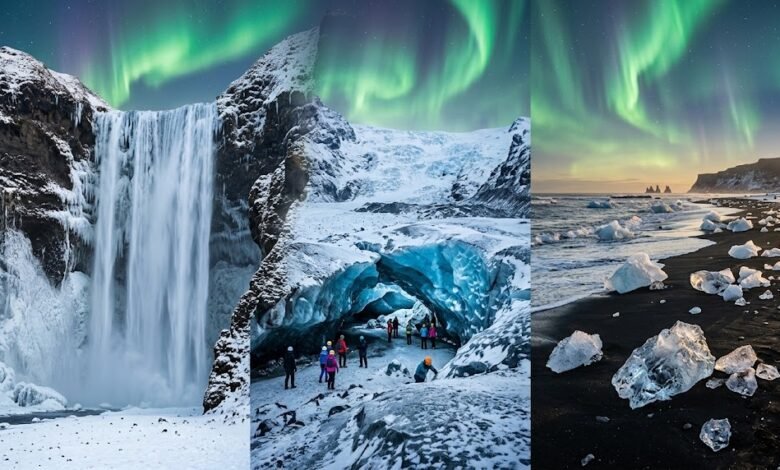
When searching for the most extraordinary Places to Spend Winter in Iceland, you will discover a country defined by its extreme elemental contrasts, rightfully earning its title as the “Land of Fire and Ice.” While summer offers the midnight sun and endless green highlands, winter transforms the island into a rugged, otherworldly frontier. In 2027, an Icelandic winter expedition is less about traditional luxury and more about raw, unfiltered adventure. From standing beneath frozen waterfalls to exploring electric-blue glacial caves, the landscape challenges and rewards travelers in equal measure.
Before you brave the North Atlantic winds, see how Iceland’s unique volcanic winter compares to other snowy destinations in our ultimate guide to the 7 best winter wonderland countries for snow lovers in 2027.
An Icelandic winter requires preparation, as the days are short and the weather is unpredictable. However, those who make the journey are treated to the greatest light show on earth: the Aurora Borealis. Here is our expertly curated guide to the 7 best places to spend winter in Iceland.
7- Akureyri: The Capital of the North
While most tourists stick to the southern coast during the winter, adventurous travelers head north to Akureyri. Nestled at the base of the Eyjafjörður Fjord, just a short distance from the Arctic Circle, Akureyri serves as the vibrant winter capital of North Iceland. Because it is surrounded by mountains, the weather here is often calmer and snowier than in the windy south.
Akureyri is a fantastic hub for winter sports. Hlíðarfjall, located just outside the town, is considered one of the best ski resorts in Iceland, offering fully illuminated slopes for night skiing. Furthermore, the northern waters are prime territory for winter whale watching. After a freezing day on a boat observing humpback whales, visitors can warm up in the newly opened Forest Lagoon (Skógarböðin), a geothermal spa seamlessly integrated into a rare Icelandic pine and birch forest.
6- Snæfellsnes Peninsula: Iceland in Miniature
Often described as “Iceland in Miniature,” the Snæfellsnes Peninsula encapsulates all of the country’s diverse landscapes in one accessible region. In winter, this peninsula becomes a dramatic, moody photographer’s paradise. The area is crowned by the Snæfellsjökull volcano and glacier, famously known as the entrance to the center of the earth in Jules Verne’s classic novel.
The absolute highlight of visiting Snæfellsnes in the winter is photographing Kirkjufell (Church Mountain). This distinct, arrowhead-shaped mountain, framed by partially frozen waterfalls in the foreground, is one of the most iconic sights in Iceland. Under a fresh blanket of snow and illuminated by the Northern Lights, the peninsula feels like a mythical realm detached from modern civilization.
5- Reykjavik: The Cozy Winter Basecamp
No trip to Iceland is complete without spending time in its colorful, quirky capital. Reykjavik is the northernmost capital city in the world, and during the deep winter, it experiences only a few hours of daylight. To combat the darkness, the city is heavily illuminated with fairy lights, and the local culture embraces gluggaveður—a uniquely Icelandic concept that translates to “window weather,” meaning weather that is beautiful to look at but terrible to be out in.
Reykjavik is the perfect cultural basecamp. Visitors can spend their short daylight hours admiring the striking architecture of the Hallgrímskirkja church or exploring the interactive Perlan museum to learn about Iceland’s volcanic forces. As the long night sets in, the city’s legendary culinary scene comes alive, offering warm, hearty dishes like traditional lamb soup (Kjötsúpa) and freshly baked rye bread in cozy, candlelit cafes.
4- The Golden Circle: Frozen Geothermal Wonders
The Golden Circle is Iceland’s most famous tourist route, and for good reason. In winter, this accessible 300-kilometer loop offers a spectacular display of the island’s geological power battling the freezing temperatures.
The route includes three primary stops. At Thingvellir National Park, visitors can literally walk between the North American and Eurasian tectonic plates, surrounded by snow-covered lava fields. Next is the Geysir Geothermal Area, where the highly active Strokkur geyser blasts boiling water 30 meters into the freezing air every few minutes. Finally, the massive Gullfoss waterfall provides a staggering display of raw power, as millions of gallons of glacial water plunge into a deep canyon, with massive icicles clinging to the surrounding cliffs.
3- The Geothermal Lagoons: Blue Lagoon & Sky Lagoon
Surviving the biting Icelandic wind is all about contrast, and nothing provides a better contrast than the country’s world-renowned geothermal spas. While the water remains a luxurious 38°C (100°F) year-round, the experience is profoundly magnified in winter when the surrounding landscape is covered in snow and ice.
The legendary Blue Lagoon, located in a lava field near the airport, offers milky-blue, silica-rich waters that feel almost alien against the black volcanic rock. However, for a more modern and dramatic experience, the newly built Sky Lagoon, located just outside Reykjavik, features a massive infinity edge that blends seamlessly into the freezing North Atlantic Ocean. Experiencing their 7-step ritual—which involves moving from a blistering sauna to a freezing cold plunge—is the ultimate Icelandic winter rejuvenation.
2- Jökulsárlón Glacier Lagoon: The Diamond Beach
Located in southeast Iceland, Jökulsárlón is an otherworldly glacial lagoon that must be seen to be believed. Massive, glowing blue icebergs continuously break off from the Breiðamerkurjökull glacier and float silently across the deep lagoon before drifting out into the turbulent Atlantic Ocean.
The true magic happens on the adjacent shore, famously known as Diamond Beach. The ocean waves catch the chunks of glacial ice and violently toss them back onto the jet-black volcanic sand. The resulting scene—hundreds of glittering, crystal-clear ice blocks scattered across the black beach like scattered diamonds—provides one of the most surreal and breathtaking winter landscapes on the planet, especially when illuminated by the low-hanging winter sun.
1- Vatnajökull National Park: The Crystal Ice Caves
Taking the number one spot for the ultimate Icelandic winter experience is the exploration of the natural crystal ice caves beneath the Vatnajökull glacier, the largest ice cap in Europe. This is an experience strictly limited to the core winter months (typically November through March), as the caves are unstable and flooded with meltwater during the summer.
Led by specialized glacier guides, visitors strap on crampons and helmets to descend beneath the surface of the glacier. Inside, the dense, highly compressed ancient ice absorbs all colors of the spectrum except blue, creating a mesmerizing, glowing sapphire environment. Walking through these temporary, ever-changing frozen tunnels is a humbling reminder of nature’s power and stands as the most extraordinary winter adventure available in Iceland in 2027.
Iceland Winter Destinations Comparison (2027)
| Rank | Destination | Region | Vibe & Atmosphere | Key Winter Attraction |
| 1 | Vatnajökull | Southeast | Extreme, surreal, unique | Crystal Blue Ice Caves |
| 2 | Jökulsárlón | Southeast | Majestic, photogenic | Icebergs on the Diamond Beach |
| 3 | Geothermal Lagoons | Southwest / Capital | Luxurious, relaxing, warm | Bathing in the Blue/Sky Lagoon |
| 4 | The Golden Circle | South | Accessible, powerful | Strokkur Geyser & Gullfoss |
| 5 | Reykjavik | Capital | Cozy, cultural, vibrant | Museums & hearty winter cuisine |
| 6 | Snæfellsnes | West | Dramatic, mythical, quiet | Snow-covered Kirkjufell Mountain |
| 7 | Akureyri | North | Active, snowy, remote | Northern lights & winter skiing |
Frequently Asked Questions (FAQs)
How many hours of daylight does Iceland get in the winter?
During the deepest part of winter (late December to early January), Iceland receives only about 4 to 5 hours of daylight, usually between 11:00 AM and 3:30 PM. The sun stays very low on the horizon, creating a continuous “golden hour” effect that is stunning for photography.
Is it dangerous to drive in Iceland during the winter?
It can be. Icelandic winter weather is notoriously volatile, featuring sudden blizzards, black ice, and hurricane-force winds. If you plan to rent a car, you must rent a 4×4 vehicle with studded winter tires. Always check the official weather and road condition websites (vedur.is and road.is) daily before setting out.
Can I visit the crystal ice caves by myself?
No. It is extremely dangerous and strictly prohibited to enter a glacier ice cave without a certified guide. The caves shift and change continuously. Professional tour operators provide the necessary safety gear (crampons, helmets) and expertise to navigate the glacier safely.
Conclusion: Conquer the Elements
A winter journey to Iceland is not a passive vacation; it is a full-sensory expedition. It is a place where you will feel the freezing spray of a glacial waterfall on your face, stand in absolute awe beneath a glowing green sky, and warm your bones in volcanic waters. In 2027, as travelers increasingly seek authentic, raw experiences, the fire and ice of the Icelandic winter remain completely unrivaled.
Over to You!
Are you brave enough to explore the sapphire depths of the Vatnajökull ice caves, or does soaking in the Sky Lagoon while watching the freezing ocean sound more your speed? Let us know your Icelandic winter dreams in the comments below!