7 Best Autonomous Mega Ships Transforming Trade in 2026
Global shipping is entering a new era where data, automation, and advanced control systems are reshaping how goods move across oceans. Autonomous Mega Ships are no longer a distant concept; they are becoming a practical solution for lower operating costs, improved safety, and more efficient trade routes.
As ports grow busier and supply chains become more complex, shipping companies are looking for vessels that can navigate with less human intervention while carrying enormous cargo volumes. The seven ship concepts below represent the most important developments driving that change.
Best 7 Autonomous Mega Ships Transforming Maritime Trade
1. Yara Birkeland
Yara Birkeland is one of the most famous examples of autonomous cargo shipping in real-world operation. Built to transport fertilizer containers in Norway, it was designed to reduce road transport and cut emissions while showing what autonomous technology can already do at sea.
Its value is not just in autonomy, but in proving that short-sea shipping can be cleaner and safer with fewer crewed movements. For maritime operators, Yara Birkeland demonstrates how automation can work in controlled coastal routes before scaling up to larger commercial corridors.
2. MV Maran Gas Apollonia Concept
The MV Maran Gas Apollonia concept represents the direction many LNG carriers are heading: highly automated navigation, predictive maintenance, and remote monitoring from shore-based control centers. In energy shipping, reliability is critical because delays can affect fuel supply chains and pricing.
Autonomous systems on vessels like this are especially useful for route optimization and engine performance management. By analyzing weather, traffic, and fuel burn in real time, Autonomous Mega Ships of this class can reduce waste and improve voyage planning over long distances.
3. Sea-King Class Deepwater Carrier
A Sea-King class deepwater carrier concept is designed around scale, endurance, and intelligent control. These ships are built to move massive cargo loads across deep-ocean routes while using sensor fusion, radar, satellite links, and machine learning for navigation support.
The real advantage is not full removal of humans in every situation, but reducing routine workload and human error. For carriers operating on long-haul trade lanes, this model can improve consistency, especially when crossing open water where conditions are difficult but predictable enough for automation.
4. Rolls-Royce Autonomous Cargo Vessel Concept
Rolls-Royce has long been a major driver in maritime automation, and its cargo vessel concepts helped define the modern discussion around autonomous shipping. These designs focus on bridge automation, remote operation, collision avoidance, and integrated system control.

What makes this category important is its systems approach. Rather than treating autonomy as a single feature, it combines propulsion, navigation, diagnostics, and communications into one digital operating environment, which is essential for Autonomous Mega Ships on commercial routes.
5. DARPA Sea Hunter
Sea Hunter is one of the most influential unmanned surface vessel projects ever developed. Originally created for long-endurance autonomous tracking and naval missions, it introduced advanced autonomy in rough ocean conditions with no crew onboard.
While it is not a commercial cargo ship, the engineering lessons are highly relevant to maritime trade. Its ability to make independent decisions, follow routes, and handle changing conditions has influenced the design philosophy behind larger autonomous freight vessels.
6. Kongsberg Yara Autonomous Bulk Carrier Concept
Kongsberg and Yara have helped push autonomous shipping from theory into practical testing. Their bulk carrier concept is aimed at transporting heavy industrial cargo with a high degree of automation, especially on fixed routes where port-to-port operation can be standardized.
This type of ship is important because bulk shipping is one of the biggest segments in global trade. If autonomy succeeds here, the impact on port efficiency, fuel savings, and labor allocation could be significant for the entire maritime logistics chain.
The Naval Group Ocean self-driving freighter concept reflects a broader industry push toward highly integrated autonomous marine systems. These designs typically combine long-range sensors, AI-based decision support, and remote fleet oversight to improve resilience at sea.
For trade operators, the key benefit is better control over large, high-value cargo movements. Autonomous Mega Ships in this class are expected to improve route reliability, reduce human fatigue risks, and support round-the-clock monitoring from centralized operations hubs.
Why Autonomous Mega Ships Matter for Global Trade
The shipping industry depends on scale, efficiency, and predictable delivery. Large autonomous vessels can help address all three by lowering crew costs, optimizing fuel use, and reducing the number of avoidable incidents caused by fatigue or human error.
They also support tighter supply chain planning. When ships can transmit constant operational data, carriers and port managers can make better decisions about berth scheduling, cargo handling, and arrival windows.
The Main Technologies Behind the Shift
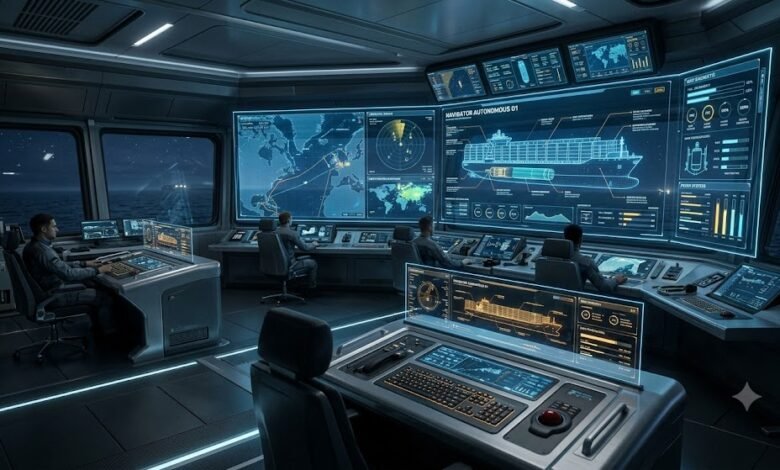
Modern autonomous shipping relies on a combination of AI, sensor systems, satellite communications, and advanced onboard software. Radar, lidar, thermal imaging, and GPS help ships understand their surroundings, while machine learning improves decision-making over time.
Cybersecurity is just as important as navigation. As ships become more connected, their systems must be protected from interference, spoofing, and digital attacks that could disrupt safe operation.
Key Challenges Still Facing the Industry
Despite rapid progress, full autonomy at sea still faces several obstacles. International regulations, insurance frameworks, port compatibility, and extreme weather conditions all slow deployment at scale.
There is also the issue of trust. Shipping companies need proof that autonomous systems can perform safely across diverse routes, not just in test environments or controlled coastal waters. That is why phased adoption is more realistic than a sudden industry-wide switch.
Frequently Asked Questions (FAQs)
Are autonomous ships already operating in the real world?
Yes. Several autonomous and semi-autonomous vessels are already in testing or limited commercial use, especially on short coastal routes and specialized shipping lanes.
Will autonomous ships replace human seafarers completely?
Not in the near term. Most current designs still require human oversight, remote monitoring, or crew involvement for maintenance, emergency response, and complex port operations.
What are the biggest benefits of autonomous shipping?
The main benefits are improved safety, lower fuel consumption, better route efficiency, reduced labor pressure, and stronger real-time control over vessel performance.
Are autonomous cargo ships safe in bad weather?
They are being designed to handle challenging conditions, but safety depends on sensor quality, software reliability, route planning, and regulatory approval. Extreme weather remains one of the hardest problems to solve.
Conclusion
The future of maritime trade is moving toward smarter, more connected vessels that can carry more cargo with fewer inefficiencies. Autonomous Mega Ships are at the center of that transformation, combining engineering, software, and data to create a new standard for ocean transport.
While full autonomy will take time to mature, the direction is clear: safer operations, better fuel management, and more intelligent trade logistics are becoming the new benchmark for global shipping.