
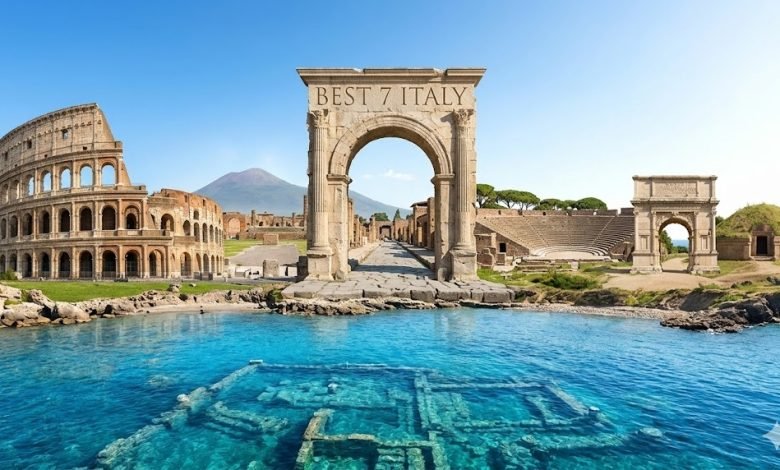
Best 7 Archaeological Sites in Italy-Iconic Roman Ruins 2026
Step into the heart of the Roman Empire where gladiators roared and emperors ruled Italy’s archaeological masterpieces aren’t mere ruins; they’re time capsules of Western civilization’s foundation. From blood-soaked arenas to ash-frozen cities, these sites boast unmatched engineering feats and artistic genius that shaped Europe forever. Ranked by historical impact and preservation quality for bestsev7en.com enthusiasts. Pro tip: Book skip-the line tickets and expert guides Italy’s treasures demand context to truly dazzle!
Best 7 Archaeological Wonders in Italy – Roman Empire’s Eternal Legacy
1- Colosseum & Roman Forum
Rome’s iconic gladiator arena (70-80 AD)—this Flavian engineering marvel seated 50,000 for epic spectacles, its elliptical design (188x156m) revolutionized crowd control. Below lies the hypogeum with trapdoors for wild animals. Adjacent Roman Forum reveals empire’s political heart: Senate House, victory arches, basilicas. Walk where Caesar fell—ultimate power symbols.
2- Pompeii
Vesuvius-frozen city AD 79—15 meters of ash preserved everyday Roman life: frescoed villas, amphitheaters, fast-food counters, even graffiti. 66 hectares excavated reveal 20,000 residents’ final moments via haunting plaster casts. Streets, temples, lupanars (brothels)—complete urban snapshot unmatched globally. Europe’s most visited archaeological park.
3- Herculaneum
Pompeii’s sophisticated sister—smaller but better-preserved under 20m volcanic mud, revealing carbonized scrolls from philosopher’s library, multi-story homes with gardens, sewers intact. Wooden balconies, food stores, jewels survived 1700°C surge. Elite suburb vibe contrasts Pompeii’s bustle—intimate dive into Roman domestic luxury.
Read more: Best 7 Archaeological Sites in Egypt for Timeless Adventures
4- Ostia Antica
Rome’s ancient seaport (4th century BC–6th AD)—time capsule of commerce with 100,000 residents: warehouses, theaters, public latrines, apartment blocks, synagogues, Mithraea. Marble-paved streets lead to baths rivaling imperial spas. Walk trade routes where grain fed empire—maritime republic’s bustling heartbeat preserved.

5- Paestum
Greek Magna Graecia jewel (6th century BC)—three Doric temples rival Greece’s best: Hera’s basilica-like structure, Neptune’s perfect proportions, Ceres’ elegant scale. Surrounding forum, amphitheater, frescoed tombs show Greek-to-Roman transition. Malaria-preserved isolation kept looters away—purest Doric architecture outside Hellenic world.
6- Hadrian’s Villa
Emperor’s Tivoli paradise (118-134 AD)—300-acre complex blending Greek, Egyptian, Roman styles: floating island theater, private canals, bath domes precursor to Pantheon. Maritime theater’s stucco survives; underground tunnels reveal slave quarters. World’s largest Roman villa showcases imperial escapism engineering.
7- Etruscan Necropolis of Cerveteri
Pre-Roman mystery (9th–6th century BC)—UNESCO-listed tumuli tombs mimic Etruscan cities above ground, with carved interiors, sarcophagi, banquet frescoes. Banditaccia necropolis (400+ tombs) reveals Italy’s “forgotten” civilization that taught Romans architecture, hydraulics, urban planning. Spooky yet sophisticated underworld city.
FAQs
Best time for Italy’s archaeological sites?
April-June or September-October—mild weather, shorter lines than summer peak.
Q- Safe for solo history travelers?
A: Yes with audio guides/apps; pickpocket-aware in Rome crowds.
Q- Full Italy ruins itinerary length?
A: 12-16 days: Rome (4), Naples/Pompeii (3), Ostia/Paestum day trips.
Q- Tickets & entry costs?
A: €16-25/site; Roma Pass (€52/48hrs) covers Colosseum+Forum+more.
Q- Photography rules inside sites?
A: Allowed no flash; drones prohibited everywhere.


Lovely website! I am loving it!! Will be back later to read some more. I am bookmarking your feeds also.