
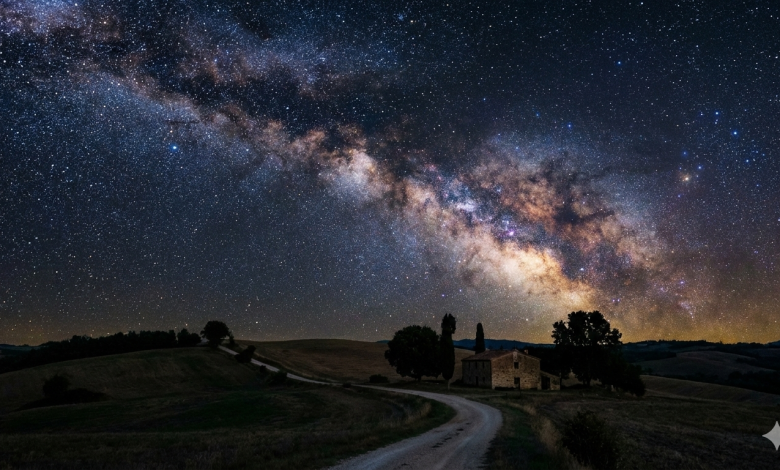
Best 7 Milky Way Facts
The Milky Way is your home galaxy yet most of it is invisible to the naked eye. This guide shares the best seven Milky Way facts in simple English, focusing on ideas you can picture easily: scale, structure, what we can see from Earth, and why the galaxy looks like a soft “river” of light in dark skies. If you came here from Earth’s landmarks, start with: Best 7 Natural Wonders in the World That Look Unreal then return to the sky at night for a different kind of wonder.
The Best 7 Milky Way Facts (Simple and Visual)
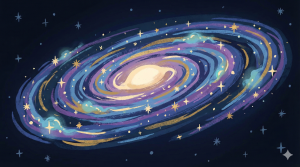
1- The Milky Way is a galaxy, not a “cloud”
The Milky Way is a giant system of stars, gas, and dust held together by gravity.
Why it matters: Once you think “system,” the sky becomes a map—not random dots.
Imagine a city of stars, not a single object.
The bright band is a “direction” you’re looking, not a line painted in the sky.
Quick fact: You’re inside it, so you can’t step back and see it whole with your eyes.

2- You only see the brightest “hint” of it from Earth
What it means: Most of the Milky Way’s stars are too dim or blocked by dust to see unaided.
Why it matters: Dark skies don’t “add stars”—they remove glare so your eyes can finally notice what’s already there.
How to experience it:
1: Pick a moonless night.
2: Go away from city lights.
3: Wait 15–20 minutes for dark adaptation.
Quick fact: Many first-timers miss it because phone screens reset night vision.
3- The Milky Way looks like a band because of how we’re positioned
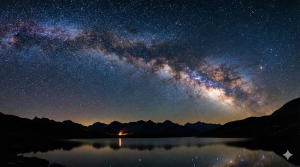
What it means: From inside a flattened galaxy, looking along the disk shows more stars packed into your line of sight.
Why it matters: The “band” is a depth effect—like looking down a long corridor of lights.
How to picture it:
1: Looking across the disk = dense star glow.
2: Looking away from the disk = fewer stars in that direction.
Quick fact: It’s not a trail; it’s perspective.
4- The brightest Milky Way views depend on season and location
What it means: The best viewing window changes with latitude and time of year.
Why it matters: Planning one good night beats ten random nights.
How to experience it:
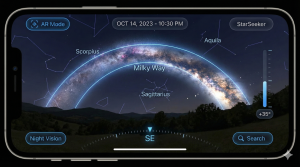
Use a stargazing app to locate the band.
Choose a wide horizon with minimal light domes.
Quick fact: “Best season” is really shorthand for “best sky geometry + darkness.
5- Dust hides parts of our galaxy—and that’s normal
What it means: Cosmic dust blocks visible light, especially toward denser regions.
Why it matters: “Invisible” doesn’t mean empty; it can mean hidden.
How to picture it:
Like fog in a city lights exist, but the view is limited.
Quick fact: Some of the most interesting regions are the hardest to see in visible light.
6- The Milky Way has a busy center (but it’s hard to see)
What it means: Toward the center direction, the galaxy is denser and more complex.
Why it matters: Many “wow” Milky Way photos aim near this region because the star field looks richer.
How to experience it:
Find a dark site; aim where the band looks thickest.
Keep expectations realistic—eyes see subtler detail than cameras.
Quick fact: Cameras often reveal color and structure your eyes only hint at.
7- You can enjoy it with your eyes first then improve photos later
What it means: Stargazing is an experience, not a gear checklist.
Why it matters: The moment matters more than settings.
How to do it: Watch first, photograph second.
If you do shoot, use a tripod and keep edits light.
Quick fact: Many great Milky Way nights happen without a single photo.
FAQ: Quick Answers
1: Can I see the Milky Way from a city?
A: Usually only a faint hint, if at all—dark skies make the biggest difference.
2: Do I need a telescope?
A: No—this is mainly a naked-eye experience.
3: Why does the Milky Way look stronger in photos?
A: Cameras collect more light over time.
Common Mistakes (and Simple Fixes)
Mistake 1: Going out on a bright Moon night expecting many stars. Fix: Choose a darker Moon phase for Milky Way hunts.
Mistake 2: Standing under a streetlight. Fix: Walk 5–10 minutes into darker ground.
Mistake 3: Constant phone checking. Fix: Dim screen and take breaks.



Why didn’t you continue? We hope you will follow this series and showcase the top 7 in this category.