
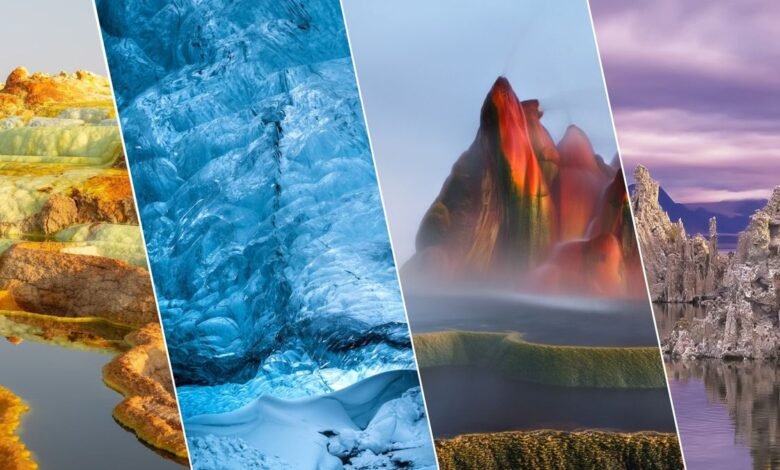
Best 7 Places on Earth That Look Like Another Planet
Some landscapes feel familiar-until you stand in front of one that doesn’t. This list gathers the best seven places on Earth that look like another planet: salt mirrors, volcanic valleys, razor-sharp rock, and colors that seem “too perfect” to be real. The picks are chosen for visual uniqueness, global interest, and the kind of scenery that looks cinematic even without editing. If you want a broader “world wonders” overview first, start here: Best 7 Natural Wonders in the World That Look Unreal.
The Best 7 Places on Earth That Look Like Another Planet
1- Salar de Uyuni, Bolivia -A mirror the sky can’t ignore
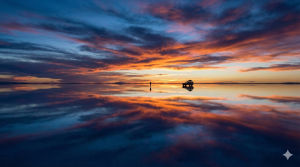
What it is: The world’s largest salt flat, famous for turning into a giant mirror when a thin layer of water covers it.
Why it’s special: It’s minimal, quiet, and surreal—horizon lines blur until the landscape feels infinite.
How to experience it:
Best time: Go for mirror-season (wet) or geometry-season (dry), depending on what you want to see.
Best tip: Bring eye protection; brightness can be intense.
Photo tip: Wide shots + a small subject create the best scale.
Quick fact: This is one of the rare places where “empty” becomes the main attraction.
2- Atacama Desert, Chile-Mars-like silence on Earth
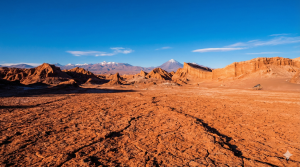
What it is: A desert region known for extreme dryness and dramatic terrain—salt flats, rock ridges, and wide skies.
Why it’s special: The textures and colors feel “planetary,” especially at sunrise and sunset.
How to experience it:
Best time: Early/late day for light and comfort.
Best tip: Hydrate and prepare for big temperature swings.
Simple plan: Combine one valley viewpoint + one night-sky stop.
Quick fact: Deserts often look “alien” because life is sparse—and geology gets to speak louder.
3- Danakil Depression, Ethiopia-Earth’s chemistry on display
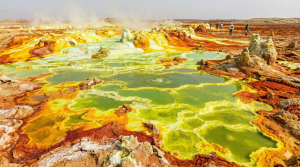
What it is: A geothermal region with vivid mineral colors, salt fields, and extreme conditions.
Why it’s special: The palette can look unreal—greens, yellows, reds—formed by minerals and heat.
How to experience it:
Best time: Cooler months are essential for comfort and safety.
Best tip: Visit with experienced local guides only.
Safety: Heat and fumes can be dangerous—follow instructions carefully.
Quick fact: This is one of the strongest reminders that Earth is still an active, changing system.
4- Yellowstone’s Grand Prismatic Spring, USA – A natural color wheel
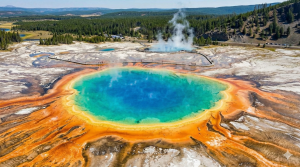
What it is: A large hot spring known for its intense color rings caused by heat and microbial life.
Why it’s special:
It looks designed-like a gradient painted onto the ground—yet it’s natural.
How to experience it:
Best time: Clear, bright conditions help the colors stand out.
Best tip: Use boardwalks only—thermal ground can be fragile and dangerous.
Photo tip: Higher viewpoints often reveal the full “ring” effect.
Quick fact: The colors are not decoration—they’re biology + temperature patterns.
5- Zhangye Danxia (Rainbow Mountains), China – Layers that look illustrated
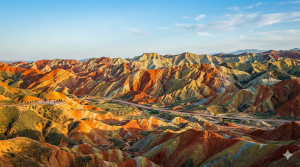
What it is: Striped, colorful rock formations formed by layered sediments and long-term geological processes.
Why it’s special: The “bands” are so clean in some views that they feel like a painting.
How to experience it:
Best time: Morning/late afternoon for softer contrast and better photos.
Best tip: Follow viewing platforms for the best angles.
Pair it with: Rock-formation deep dive → /incredible-rock-formations/
Quick fact: Some landscapes look edited because geology can be highly structured.
6- Wadi Rum, Jordan-Red rock, wide horizons
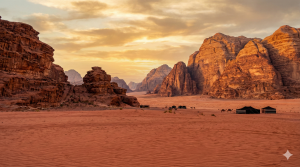
What it is: A desert valley with towering sandstone formations and open, cinematic space.
Why it’s special: The red tones and giant rock “walls” create a calm, otherworldly mood-especially at dusk.
How to experience it:
Best time: Sunset into early night for color + stars.
Best tip: A short hike to a viewpoint beats rushing between many stops.
Respect: Stay on permitted routes and camps.
Quick fact: Some of the most “space-like” views happen when the landscape is simple and the sky is huge.
7- Dallol (Danakil area), Ethiopia – A place that feels unfinished
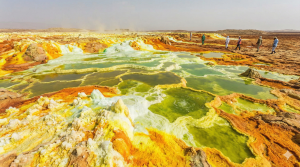
What it is: A famously vivid geothermal zone with mineral structures that can look like another planet’s surface.
Why it’s special: The forms can be delicate and strange—like nature experimenting with shape and color.
How to experience it:
Best time: Only with careful planning in safer seasons.
Best tip: Prioritize safety and local expertise over “getting closer.”
Photo tip: Keep compositions clean—let the patterns lead.
Quick fact: “Alien-looking” often means extreme environment + unusual chemistry.
FAQ: Quick Answers
Q1: What makes a place look “like another planet”?
A: Usually a mix of extreme dryness/heat, unusual minerals, volcanic rock, or massive salt flats—conditions that create uncommon colors and textures.
Q2: Are these places safe to visit?
A: Many are safe with planning, but geothermal/extreme-heat locations require extra caution, guides, and strict rule-following.
Q3: What should I pack for surreal landscapes and deserts?
A: Sun protection, water, sturdy footwear, and layers for temperature changes.
Q4: Which is best for photography beginners?
A: Places with easy access and clear viewpoints (salt flats, national parks, viewing platforms) are usually the easiest to start with.
Q5: What’s the most respectful way to visit fragile landscapes?
A: Stay on trails/boardwalks, avoid touching formations, and follow local conservation guidance.
Common Mistakes (and Simple Fixes)
– Chasing too many locations in one trip. Fix: Pick 1–2 regions and slow down.
– Ignoring safety rules in geothermal areas. Fix: Stay on marked paths and go with guides where required.
– Shooting only close-ups. Fix: Add wide frames to show scale and emptiness.
– Visiting at harsh midday light. Fix: Aim for sunrise/sunset for calmer tones and better photos.
Some of Earth’s most unforgettable places don’t feel loud—they feel quietly impossible. Which location would you put at #1, and what “otherworldly” place would you add as an honorable mention?

I like the valuable information you provide in your articles. I’ll bookmark your blog and check again here frequently. I am quite sure I’ll learn a lot of new stuff right here! Good luck for the next!
I am not sure the place you’re getting your info, however great topic. I must spend a while finding out much more or working out more. Thank you for great info I used to be searching for this info for my mission.
I’m so grateful, I’ve finally found what I was looking for. God bless you, man. Have a great day. Goodbye.
Thanks a bunch for sharing this with all of us you actually know what you’re speaking approximately! Bookmarked. Please also talk over with my web site =). We could have a link exchange arrangement among us!
Thanks for this post, I am a big big fan of this internet site would like to go on updated.
Never enter your email, password, or credit card details after clicking a link from an unverified comment—these phishing pages look real but exist only to harvest your data for identity theft or fraud.
I’ve recently started a site, the info you offer on this website has helped me tremendously. Thanks for all of your time & work.