
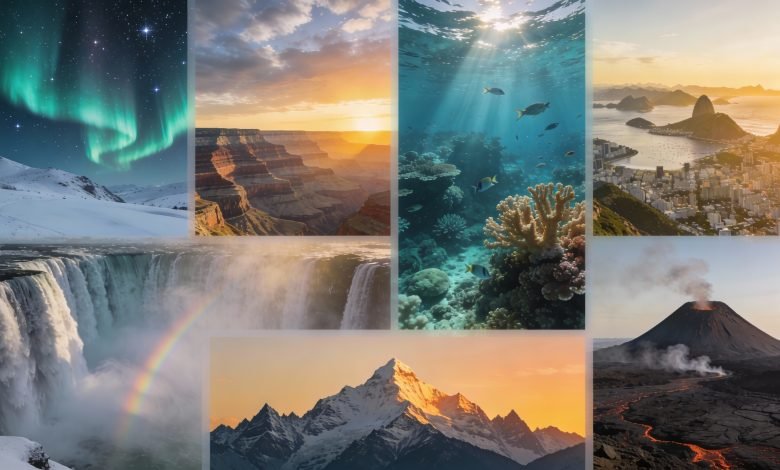
Best 7 Natural Wonders in the World That Look Unreal
Some places don’t just look beautiful-they look almost impossible. This guide gathers the best seven natural wonders in the world that feel unreal in the most quiet, elegant way: dramatic water, ancient rock, living reefs, and sky-lit landscapes. The picks here are chosen for global fame, visual impact, and the kind of “first impression” that stays with you long after you leave. If you enjoy places that feel slightly otherworldly, don’t miss the companion guide: Best 7 Places on Earth That Look Like Another Planet.
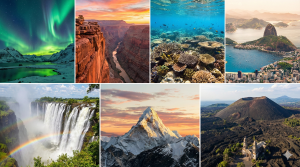
Best 7 Natural Wonders in the World (Quietly Unforgettable)
1- Aurora Borealis (Northern Lights) – The sky, softly alive
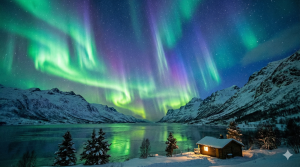
What it is: A natural light display that paints the night sky with shifting curtains of color.
Why it’s special: It’s one of the few wonders that feels “personal”—the sky looks different every minute, and no two nights are the same.
How to experience it:
– Best time: Dark, clear nights in aurora seasons (varies by region).
– Best tip: Choose a location with low light pollution and check cloud cover.
– Photo tip: Use night mode or a tripod if possible.
Quick fact: The best view often comes when you stop chasing the “perfect shot” and simply watch.
2- The Grand Canyon -Time turned into landscape
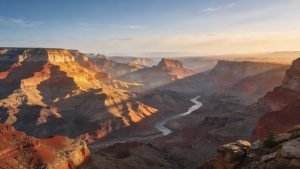
What it is: A vast canyon carved over immense time, with layers that read like pages of Earth’s story.
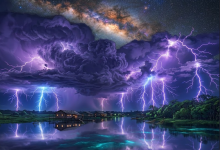
Why it’s special: The scale is hard to grasp in photos; the quiet depth and color changes at sunrise/sunset make it feel unreal.
How to experience it:
– Best time: Early morning or late afternoon for softer light.
– Best tip: Pick a viewpoint first, then add a short trail don’t try to “do it all” in one day.
– Safety: Carry water; weather shifts fast.
Quick fact: The canyon’s colors can change dramatically within minutes as light moves.
3- Great Barrier Reef – A living wonder
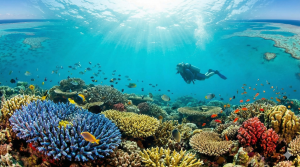
What it is: The world’s most famous coral reef system, visible even from above in many areas.
Why it’s special: It’s not just scenery—it’s life, patterns, and movement, like an underwater city.
How to experience it:
– Best time: Calm-water seasons for clearer visibility.
– Best tip: Choose eco-conscious operators and follow reef-safe guidance.
– Simple gear: A mask/snorkel is enough for many experiences.
Quick fact: Reefs are both beautiful and fragile—good tourism protects what it showcases.
4- Harbor of Rio de Janeiro – Mountains meeting the sea
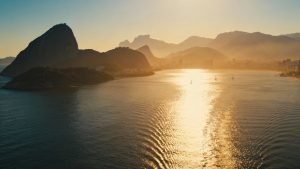
What it is: A dramatic natural bay framed by steep mountains and ocean views.
Why it’s special: The contrast—smooth water, sharp peaks, and wide sky—creates a cinematic feel without needing filters.
How to experience it:
– Best time: Clear mornings for crisp visibility.
– Best tip: View from a high point, then from water level for two different perspectives.
– Photo tip: Wide-angle shots capture the “scale story.”
Quick fact: Some landscapes feel designed – this one feels composed.
5- Victoria Falls -Water in full voice
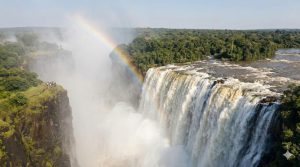
What it is: One of the largest and most powerful waterfalls on Earth, with mist that can rise like weather.
Why it’s special: It’s not only what you see-it’s what you hear and feel; the air changes near it.
How to experience it:
Best time: Depends on whether you prefer maximum flow or clearer views with less mist.
Best tip: Bring rain protection for your phone/camera.
Safety: Respect barriers and warnings-spray hides slippery edges.
Quick fact: In heavy flow, the waterfall can create its own atmosphere around you.
6- Mount Everest -The world’s most iconic skyline
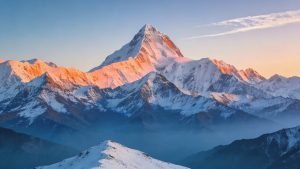
What it is: The tallest mountain above sea level, and a symbol of extremes.
Why it’s special: Even without climbing, seeing it (or the surrounding Himalayas) feels like witnessing the edge of what’s possible.
How to experience it:
Best time: Clear seasons with stable weather windows.
Best tip: Consider viewpoints/treks that prioritize safety and local guidance.
Respect: Altitude is real—go slow.
Quick fact: For most people, the “Everest experience” is about perspective, not the summit.
7- Parícutin Volcano – A newborn landscape
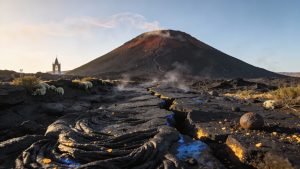
What it is: A volcano famously known for forming in modern times, reshaping the land within a human lifetime.
Why it’s special: It reminds you the Earth is not finished—new land can appear, and old landmarks can change.
How to experience it:
Best time: Mild weather for hiking across volcanic terrain.
Best tip: Wear sturdy shoes; lava rock is rough and uneven.
Safety: Check local access rules and conditions.
Quick fact: Volcanic landscapes often look “alien” because they are geologically young.
FAQ: Quick Answers
Q1: What are the best natural wonders in the world for first-time travelers?
A: The best choice is the one that matches your comfort level—easy viewpoints, good infrastructure, and clear seasons make the experience smoother.
Q2: Do I need expensive gear to enjoy natural wonders?
A: No—comfortable clothing, basic safety items, and patience matter more than camera equipment.
Q3: What’s the best time of day for photos at natural landmarks?
A: Early morning and late afternoon usually offer softer light and fewer crowds.
Q4: How can travel be more respectful to nature?
A: Stay on marked trails, avoid disturbing wildlife, and support local eco-responsible operators.
Q5: Which wonder is best for a “once in a lifetime” feeling?
A: Aurora nights and powerful waterfalls often create the strongest “you had to be there” effect—because they’re dynamic, not static.
Natural wonders are at their best when they’re experienced slowly-without rushing the moment. Which of these seven feels most “unreal” to you, and why?
Hello, this is a good article and you have a great writing style, but your style needs more images and a broader presentation of information. I hope to see more good articles in this section.
I have been surfing on-line greater than 3 hours these days, yet I by no means discovered any fascinating article like yours. It is lovely price sufficient for me. In my view, if all site owners and bloggers made good content material as you probably did, the net shall be much more helpful than ever before.
Usually I do not read article on blogs, but I wish to say that this write-up very pressured me to try and do it! Your writing taste has been surprised me. Thank you, quite great post.
whoah this blog is magnificent i like studying your articles. Stay up the good paintings! You understand, many people are looking round for this info, you can help them greatly.
I cling on to listening to the rumor talk about receiving free online grant applications so I have been looking around for the finest site to get one. Could you tell me please, where could i find some?